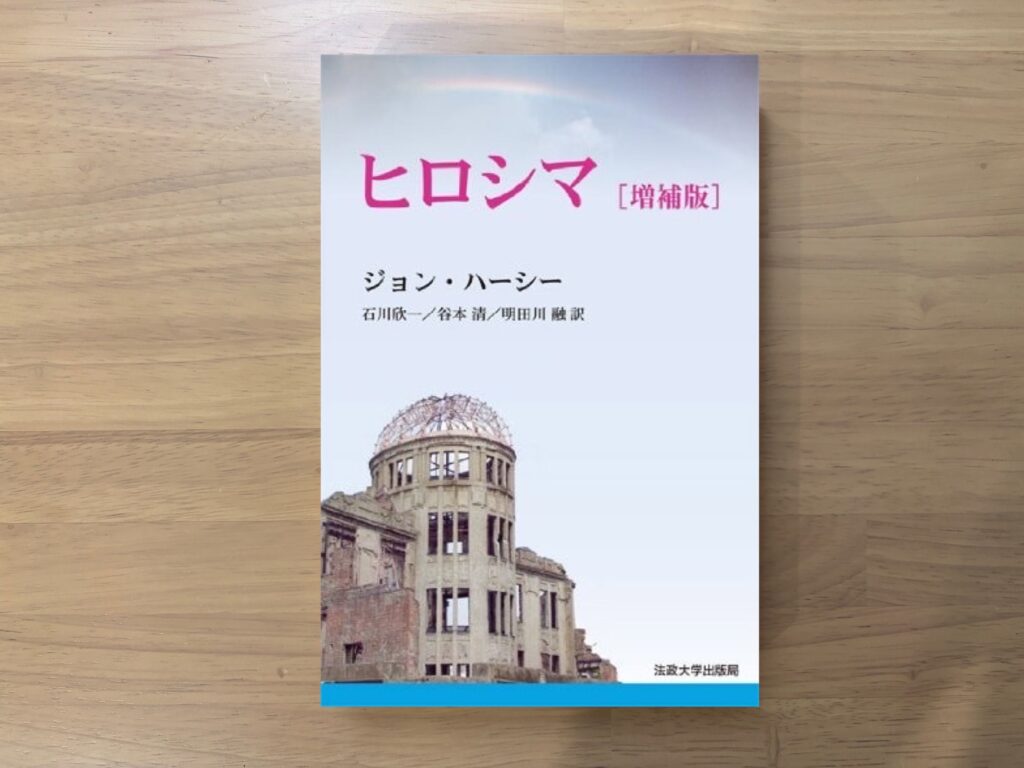
10 Best Historical Sites in Hiroshima to Learn About War and Peace
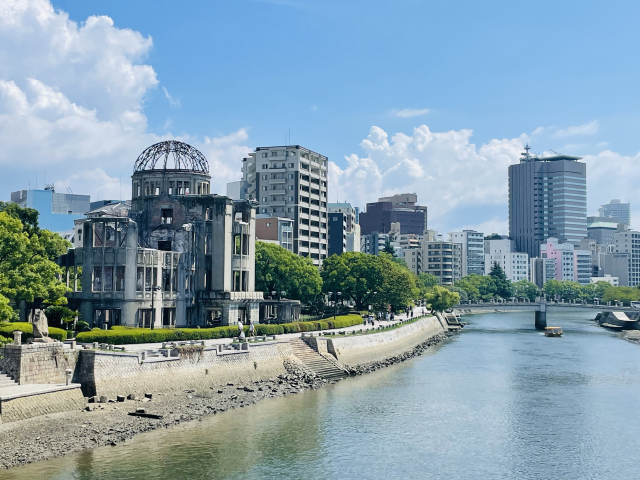
Hiroshima is home to many places that preserve the history of war, the atomic bombing, postwar reconstruction, and the city’s journey toward peace.
In this article, we introduce 10 historical sites to visit in Hiroshima, focusing on the region’s wartime history, the atomic bombing, postwar reconstruction, and its path toward peace. If you want to gain a deeper understanding of Hiroshima while traveling through the region, these sites are an excellent place to start.
10 Best Historical Sites in Hiroshima
The Atomic Bomb Dome and Hiroshima Peace Memorial Museum are among the best-known places to learn about Hiroshima’s history. However, if you want to understand the city and prefecture more deeply, from the prewar and wartime years to postwar reconstruction, it is worth visiting some of the other historical sites as well.
Here are 10 recommended places to learn about Hiroshima’s history.
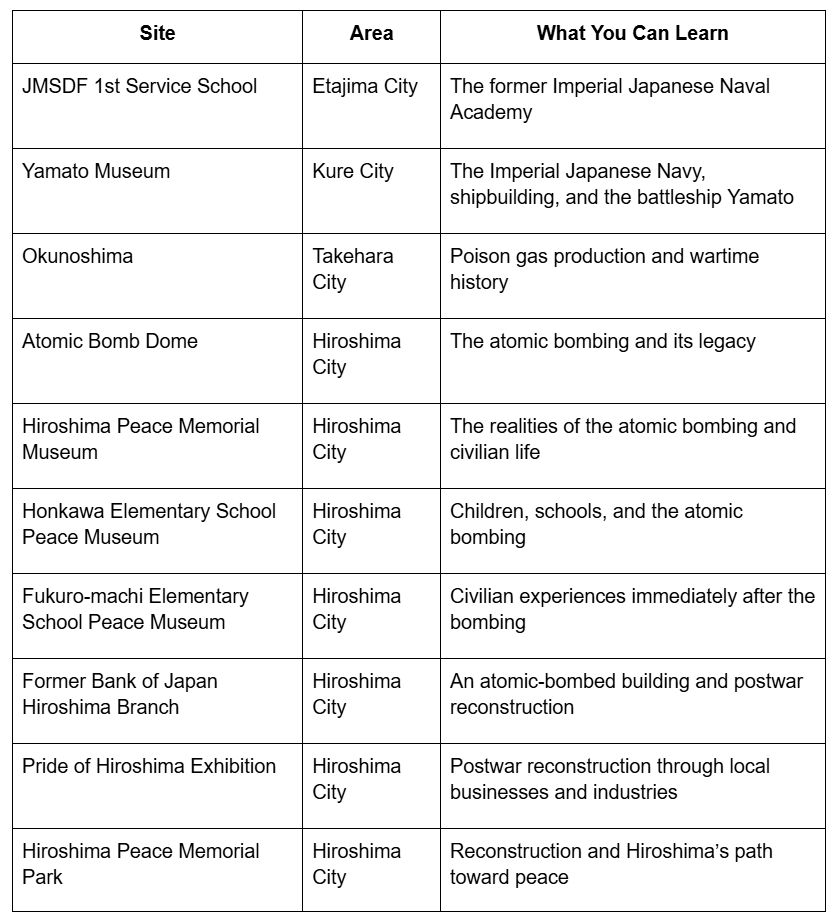
From here, we will introduce each site in historical order so that you can follow Hiroshima’s history as a journey through time: “Before and During World War II,” “At the Time of the Atomic Bombing,” and “Postwar Reconstruction.”
3 Sites to Learn About Hiroshima Before and During World War II
Hiroshima had deep ties to the military before and during World War II. Today, places such as Kure, Etajima, and Okunoshima still preserve facilities and remains that tell this part of Hiroshima’s history.
Here are three sites where you can learn about Hiroshima before and during the war.
JMSDF 1st Service School
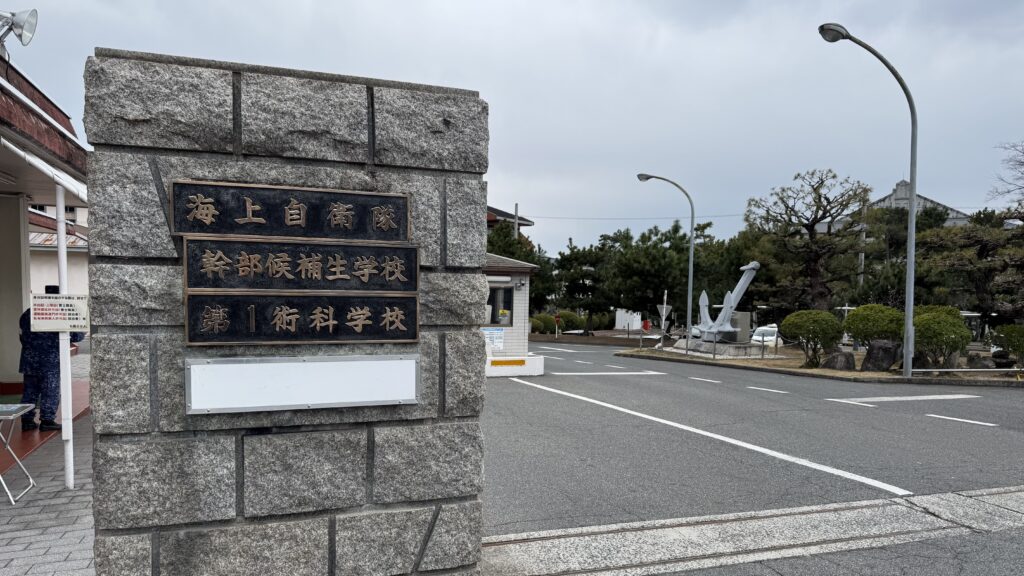
The JMSDF 1st Service School on Etajima is located on the former site of the Imperial Japanese Naval Academy. The academy moved from Tokyo to Etajima in 1888, where many naval officers were trained. Along with the Britannia Royal Naval College in Dartmouth, UK, and the U.S. Naval Academy in Annapolis, it has often been described as one of the world’s three great naval academies.
Today, historic buildings and materials from that era remain, including the former cadet school building made of red brick and the Naval History Museum. Visiting the site offers insight into the history of the Imperial Japanese Navy and the role Hiroshima played as an important military region before the war.
For more information on what to see and how to access the site, see our article, “JMSDF 1st Service School | Explore the Former Imperial Japanese Naval Academy in Etajima.”
Yamato Museum
The Yamato Museum in Kure explores the history of the battleship Yamato, the Imperial Japanese Navy, and Kure’s shipbuilding industry. From the Meiji era onward, Kure developed into one of Japan’s major naval ports and shipbuilding centers.
Inside the museum, visitors can see a 1/10-scale model of the battleship Yamato along with historical materials and exhibits that explain Kure’s shipbuilding technology and wartime history. The museum reopened after a major renovation in April 2026, with updated exhibitions exploring history, peace, and technology from new perspectives.
Okunoshima
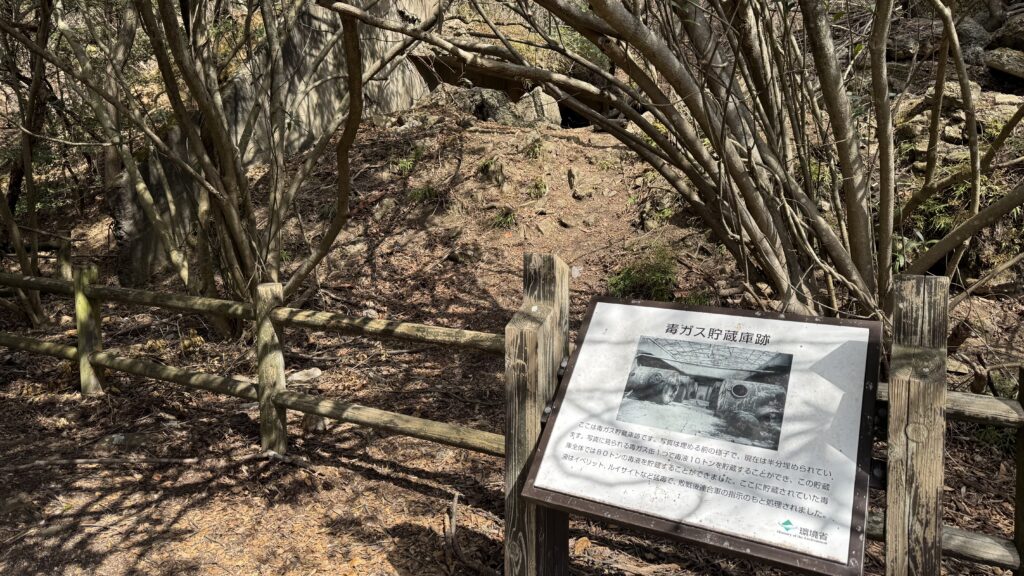
Okunoshima, located off the coast of Takehara, is now famous as “Rabbit Island,” but from 1929 to 1945, it was also home to a poison gas production facility operated by the Imperial Japanese Army. Because the facility was considered a military secret, the island was even removed from some maps available to the public at the time.
Today, wartime remains such as the former power plant and poison gas storage facilities can still be seen across the island. The Okunoshima Poison Gas Museum also displays equipment, protective clothing, and records related to the people who worked there. The contrast between the island’s peaceful scenery today and its wartime past offers a unique perspective on Hiroshima’s history.
For more information on its history, highlights, and access, see “Okuno Island—Layers of Memory Floating in the Seto Inland SeaOkuno Island”
4 Sites to Learn About Hiroshima at the Time of the Atomic Bombing
On August 6, 1945, an atomic bomb was dropped on Hiroshima, causing devastating damage across the city. Today, buildings and museums throughout Hiroshima still preserve the stories of the destruction and the lives of people at the time.
Here are four places where you can learn more about Hiroshima at the time of the atomic bombing.
Atomic Bomb Dome

Located in central Hiroshima, the Atomic Bomb Dome is one of the most recognizable surviving structures from the atomic bombing of August 6, 1945. Originally built in 1915 as the Hiroshima Prefectural Industrial Promotion Hall, the building stood almost directly beneath the hypocenter, yet part of its central structure remained standing.
After the war, there was debate over whether the building should be preserved or demolished. It was ultimately preserved as a reminder of the bombing and was designated a UNESCO World Heritage Site in 1996. Today, it remains a powerful place to learn about the atomic bombing and reflect on peace.
For more information on its history and what to see, see our article, “Hiroshima’s Past and Present, as Felt at the Atomic Bomb Dome — Memories Standing Quietly.”
Hiroshima Peace Memorial Museum
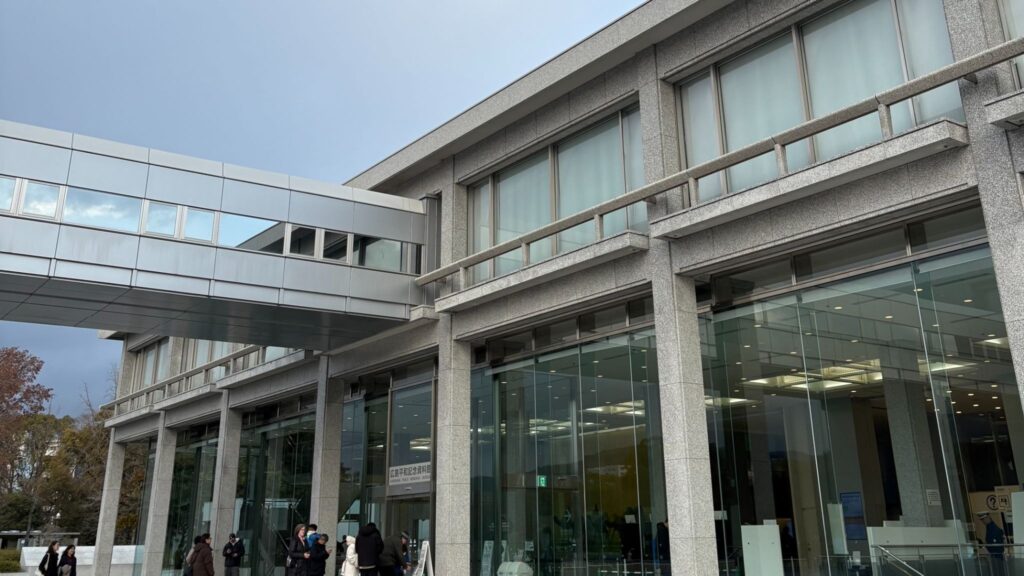
The Hiroshima Peace Memorial Museum presents the devastation caused by the atomic bombing and the experiences of survivors through original artifacts, photographs, videos, and other materials. Inside the museum, visitors can see personal belongings from victims, photographs taken at the time, and testimonies from survivors, helping them understand more concretely what happened in Hiroshima on August 6, 1945.
The museum shows not only the destruction of buildings and the city, but also the conditions faced by ordinary people at the time, making it an essential place to learn about Hiroshima during the atomic bombing.
For more information on what to see and how to access the museum, see our article, “Learning About Hiroshima’s History at the Hiroshima Peace Memorial Museum — Encountering the Memories of the Atomic Bombing”.
Honkawa Elementary School Peace Museum

The Honkawa Elementary School Peace Museum preserves part of the former Honkawa National School, which was located about 410 meters from the hypocenter. The school was severely damaged by the atomic bombing, and many students and teachers lost their lives.
Today, visitors can see parts of the bombed school building and basement, along with photographs, personal belongings, and models showing Hiroshima immediately after the bombing. Through the setting of an actual school, the museum offers a powerful perspective on how the atomic bombing affected children and education.
For more information on what to see and how to access the museum, see our article, “Honkawa Elementary School Peace Museum | Discover the School Featured in Barefoot Gen”.
Fukuro-machi Elementary School Peace Museum

The Fukuro-machi Elementary School Peace Museum preserves part of the former Fukuro-machi National School, which was located about 460 meters from the hypocenter. Many students and teachers were killed in the atomic bombing, and the school building was later used as a relief station for the injured.
The messages that were written on the walls and pillars in charcoal and chalk by people searching for family members and friends are now presented in a restored form to convey what the site was like at the time.
For more information on what to see and how to access the museum, see our article, “Fukuro-machi Elementary School Peace Museum | Discover the Messages Left on the Walls.”
3 Sites to Learn About Hiroshima’s Postwar Reconstruction
After suffering devastating damage from the atomic bombing, Hiroshima began rebuilding its city and industries in the years after the war.
Here are three places where you can learn about Hiroshima’s postwar reconstruction and its path toward peace.
Former Bank of Japan Hiroshima Branch
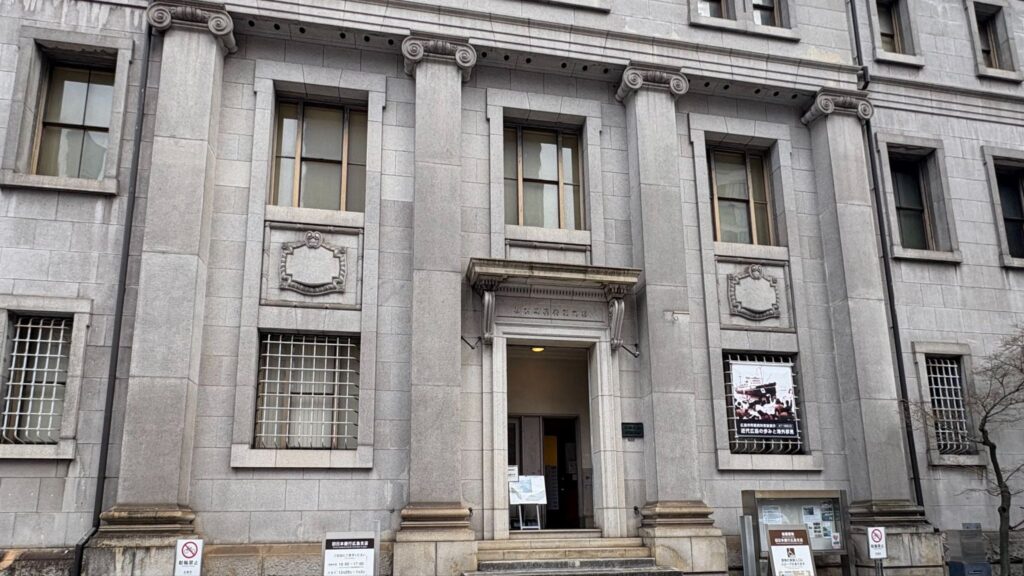
The Former Bank of Japan Hiroshima Branch survived the atomic bombing despite being located only about 380 meters from the hypocenter. Although the building was severely damaged, the branch resumed operations just two days after the bombing, on August 8, 1945.
After the bombing, it helped maintain Hiroshima’s financial system by providing space for private banks and allowing people who had lost their bankbooks or seals to withdraw money. Today, the building is open to the public and offers visitors a chance to learn about both the atomic bombing and the beginning of Hiroshima’s postwar reconstruction.
For more information on what to see and how to access the site, see our article, “Another Role of the Former Bank of Japan Hiroshima Branch: Preserving the Memory of the Atomic Bombing.”
Pride of Hiroshima Exhibition
The Pride of Hiroshima Exhibition is a permanent exhibition that tells the story of Hiroshima’s postwar reconstruction through the perspectives of local businesses and industries. It continues the concept of an exhibition originally held during the 2023 G7 Hiroshima Summit and is now permanently open at Hiroshima Gate Park.
Through historical materials, videos, and other exhibits, visitors can learn how businesses, industries, and everyday life in Hiroshima were rebuilt after the atomic bombing. It offers a different perspective on the city’s recovery by focusing on the companies and people who helped shape modern Hiroshima.
Hiroshima Peace Memorial Park

Hiroshima Peace Memorial Park was developed in the Nakajima district, an area that was devastated by the atomic bombing. After the Hiroshima Peace Memorial City Construction Law was enacted in 1949, reconstruction plans centered on creating Hiroshima as a city dedicated to peace. Today, the park stands as a symbol of both the city’s reconstruction and its path toward peace.
The park is home to memorials such as the Cenotaph for the A-bomb Victims and the Children’s Peace Monument, as well as the Hiroshima National Peace Memorial Hall for the Atomic Bomb Victims. Together, these sites preserve the memory of the bombing and show how Hiroshima has continued to share its message of peace with future generations.
For more information on what to see and how to access the park, see our article, “Spend some quiet time reflecting on history at Hiroshima Peace Memorial Park”.
Explore Hiroshima’s History and Peace from Hotel Small World

Hotel Small World is a hotel based on the theme of peace, located about a 10-minute walk from Hiroshima Peace Memorial Park.
Guest rooms include books and materials about Hiroshima’s history and peace, allowing you to reflect at your own pace on what you saw and learned after visiting the sites introduced in this article.
If you would like to travel while learning more about Hiroshima’s history and peace, consider staying at Hotel Small World.
Conclusion
Hiroshima is home to many places where visitors can learn not only about the atomic bombing at sites such as the Atomic Bomb Dome and Hiroshima Peace Memorial Museum, but also about the region’s military history before and during the war, its postwar reconstruction, and its path toward peace.
By visiting the sites introduced in this article, you can gain a deeper understanding of how the different chapters of Hiroshima’s history are connected, including the periods before and after the atomic bombing. If you visit Hiroshima, consider exploring some of these places that interest you.


Recommend
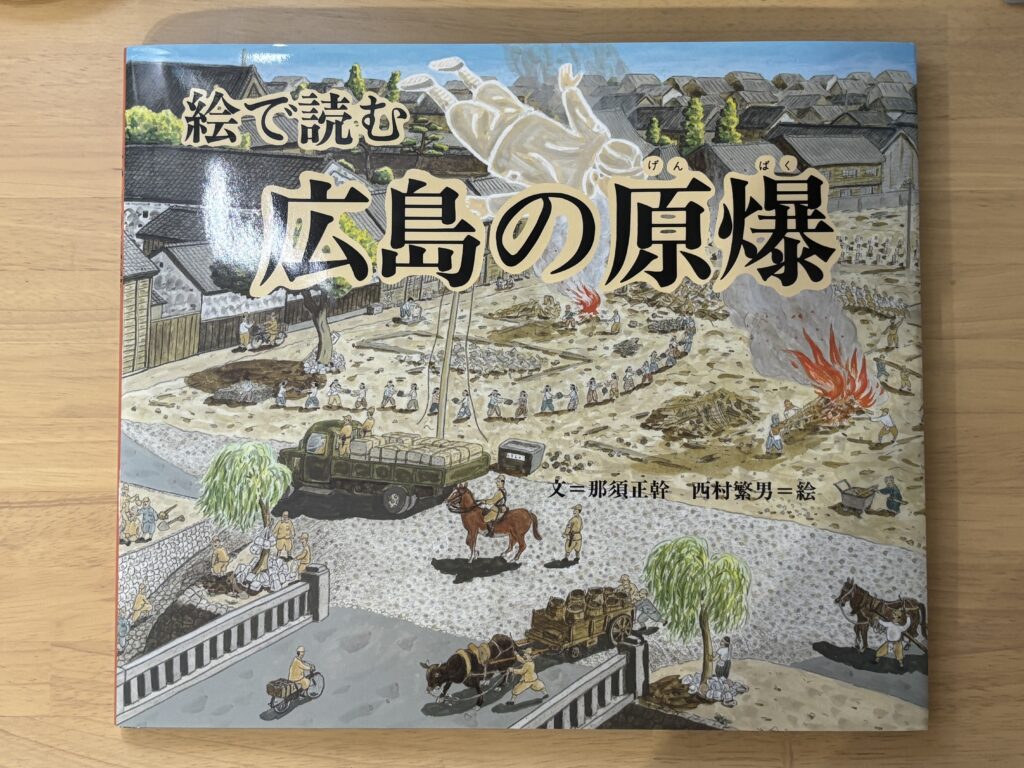
Learning About the Hiroshima Atomic Bombing Through “HIROSHIMA: A Tragedy Never to Be Repeated”
Rain That Fell on Hiroshima and Its Aftermath, as Depicted in “Black Rain”
7 Best Hiroshima Souvenirs | What to Buy in Hiroshima, Recommended by Locals