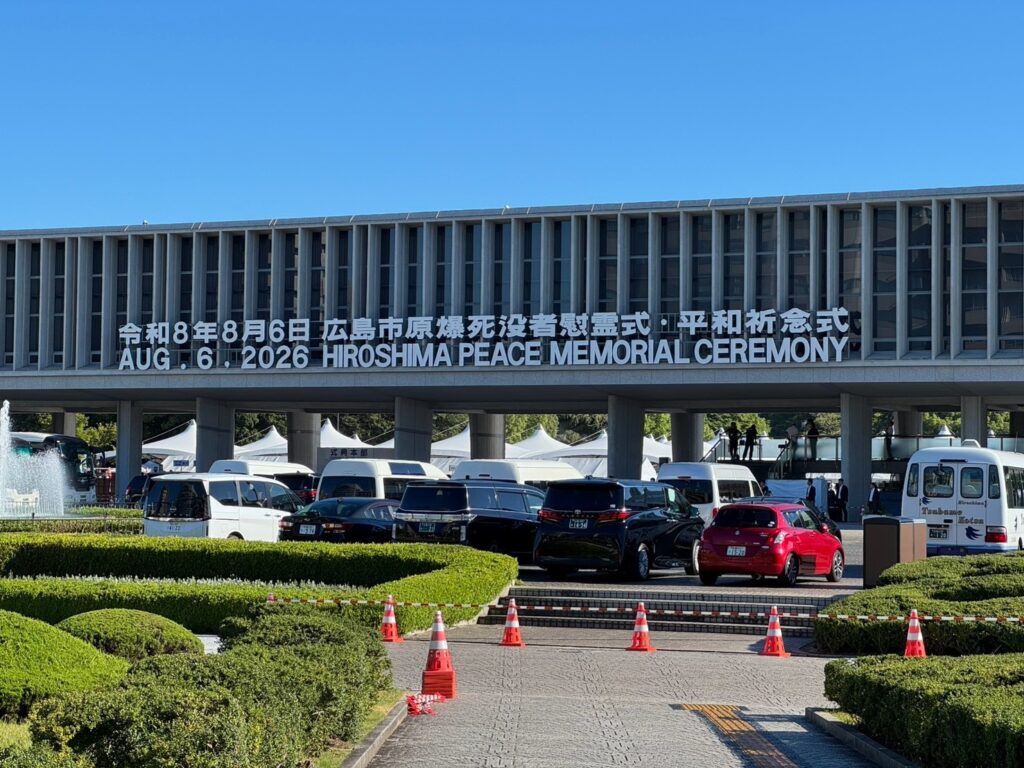
Another Role of the Former Bank of Japan Hiroshima Branch: Preserving the Memory of the Atomic Bombing
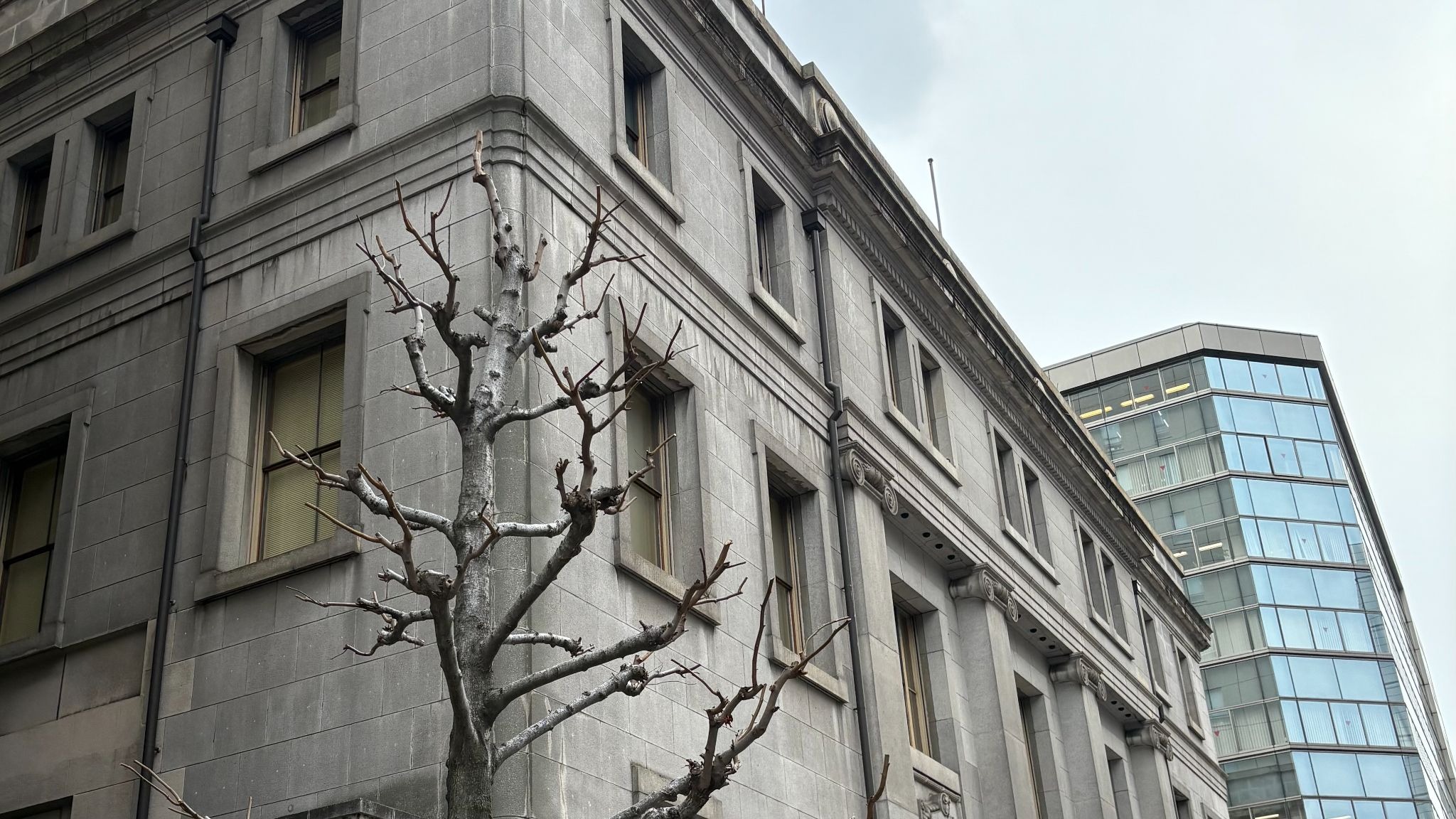
As you walk through downtown Hiroshima, a building with a particularly imposing presence emerges among the modern skyscrapers and commercial complexes. It is the former Bank of Japan Hiroshima Branch, located in Fukuro-machi.
Hiroshima has places that visitors come to with a strong awareness of the atomic bombing, such as the Peace Memorial Park and the Atomic Bomb Dome. On the other hand, the former Bank of Japan Hiroshima Branch is a place that quietly continues to tell its story while blending naturally into the city’s daily life.
Precisely because this building actually weathered the atomic bombing—a defining moment in Hiroshima’s history—and supported the city’s postwar reconstruction, it possesses an atmosphere and a weight of time that can only be felt here.
A building that survived the blast, located 380 meters from the epicenter
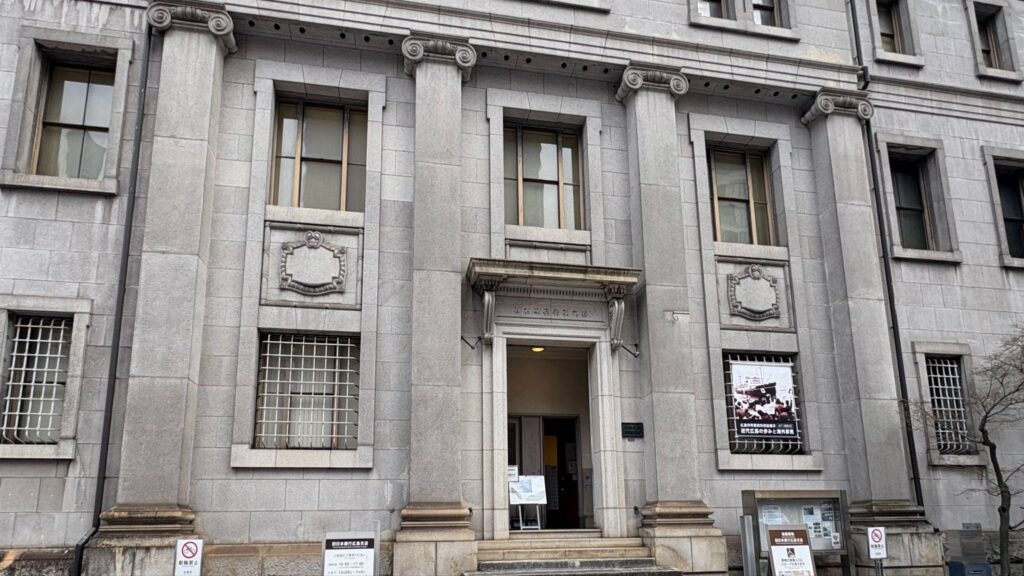
The former Bank of Japan Hiroshima Branch was a branch office of the Bank of Japan constructed in 1936. Built of steel-framed reinforced concrete, it is said to have been one of the most robust structures in Hiroshima City at the time.
On August 6, 1945, when the atomic bomb was dropped on Hiroshima, this building was located just 380 meters from the hypocenter. Despite this, the building itself survived the blast and remains a valuable example of a structure that withstood the atomic bombing.
At the time of the bombing, the branch was in the process of reinforcing its defenses against air raids. The glass roof in the center of the rooftop had been covered with wood, and earthworks had been carried out on the roof. Furthermore, on the day before the bombing, work was underway to demolish an adjacent wooden building to create a firebreak.
However, the damage caused by the atomic bomb was beyond imagination. The blast blew away the gates, window frames, shutters, and glass doors, and severely damaged the desks, chairs, and cabinets inside. Records indicate that bloodstains from injured employees remained inside the building, creating a scene of utter devastation.
Postwar Reconstruction That Began in the Ruins
It is said that immediately after the war, the former Bank of Japan Hiroshima Branch was little more than a “ruin,” with only the debris cleared away. Even so, the staff continued their work while sleeping inside the building, sustaining Hiroshima’s financial functions.
Repairs to the windows and restoration of utilities such as electricity, water, and telephone service were carried out little by little, and full-scale renovation work began the following year. When I considered that the postwar reconstruction of Hiroshima began gradually from places like this, the significance of the building before my eyes felt all the more tangible.
What struck me most was the record stating that the vault and underground storage facilities remained intact even after the atomic bombing. Even as the entire city lay in ruins, this building continued to fulfill its role as a financial institution, serving as one of the foundations for reconstruction.
In fact, the Hiroshima Branch resumed operations on August 8, just two days after the atomic bomb was dropped. The branch provided counter loans to private banks, and with a flexible approach, it processed withdrawals for people who had lost their passbooks and seals due to the blast.
In a Hiroshima reduced to ashes, keeping the flow of cash moving was undoubtedly essential for people to rebuild their lives. I felt strongly that the presence of Branch Manager Yoshikawa, who took command on site despite his severe injuries, and the staff who continued to handle operations, supported a major step forward in Hiroshima’s reconstruction.
A place where learning continues through exhibitions
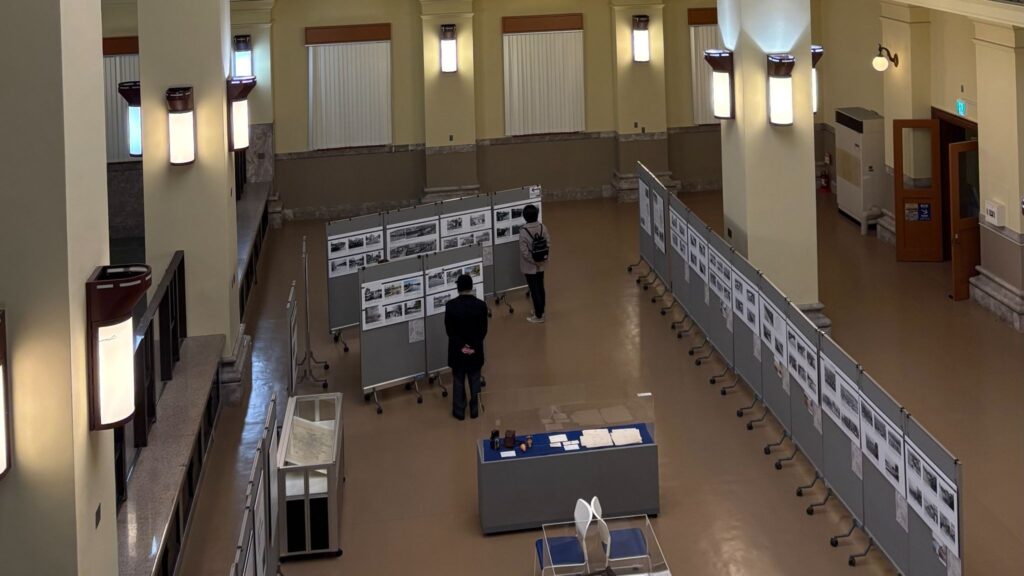
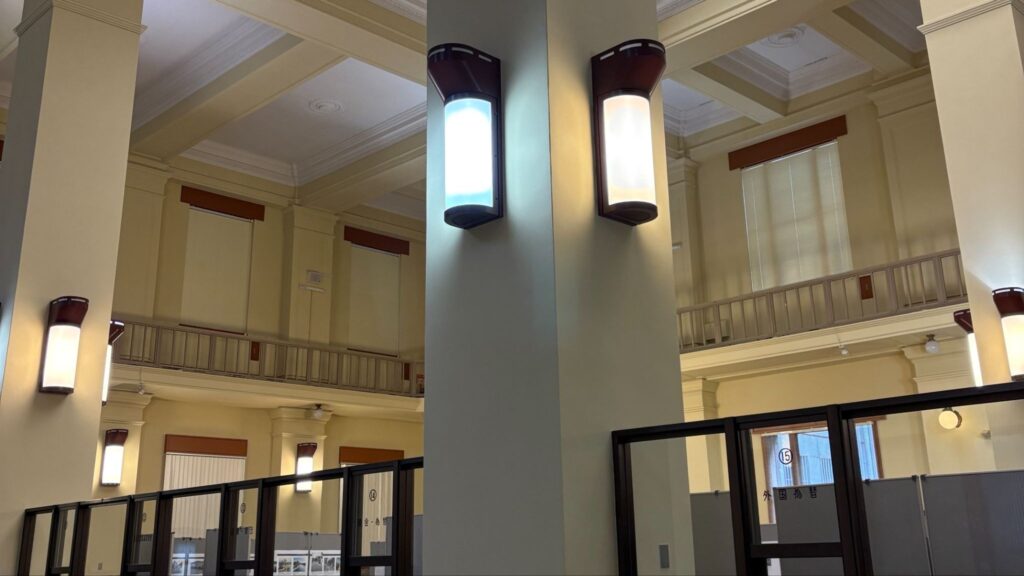
The interior of the former Bank of Japan Hiroshima Branch is now open to the public, offering visitors the opportunity to learn about Hiroshima’s history through permanent and special exhibitions.
On the basement level, a permanent exhibition titled “The History of Modern Hiroshima and Overseas Emigration” showcases the changes in the city from the pre-war to the post-war era, as well as the history of immigrants from Hiroshima Prefecture who moved overseas. The exhibition goes beyond the memory of the atomic bombing to explore the history of “Hiroshima as a city,” offering a space where visitors can gain a more multidimensional understanding of the city’s development.
Additionally, the second floor houses a reference room utilizing the former branch manager’s office and reception room, where visitors can see features such as wainscoting bearing traces of the atomic bombing and fireplace-style decorations from the building’s original construction. I believe one of the unique charms of this place is that it allows visitors to not only “read” history but also to physically sense it through the building itself.
Furthermore, the former Bank of Japan Hiroshima Branch regularly hosts special and themed exhibitions, featuring a variety of events such as photo exhibitions and art displays related to peace, war, and Hiroshima’s culture. I find it particularly appealing that this is not a place you visit just once and leave; rather, it is a place where you can learn something new every time you visit.
The Meaning of Staying in the City
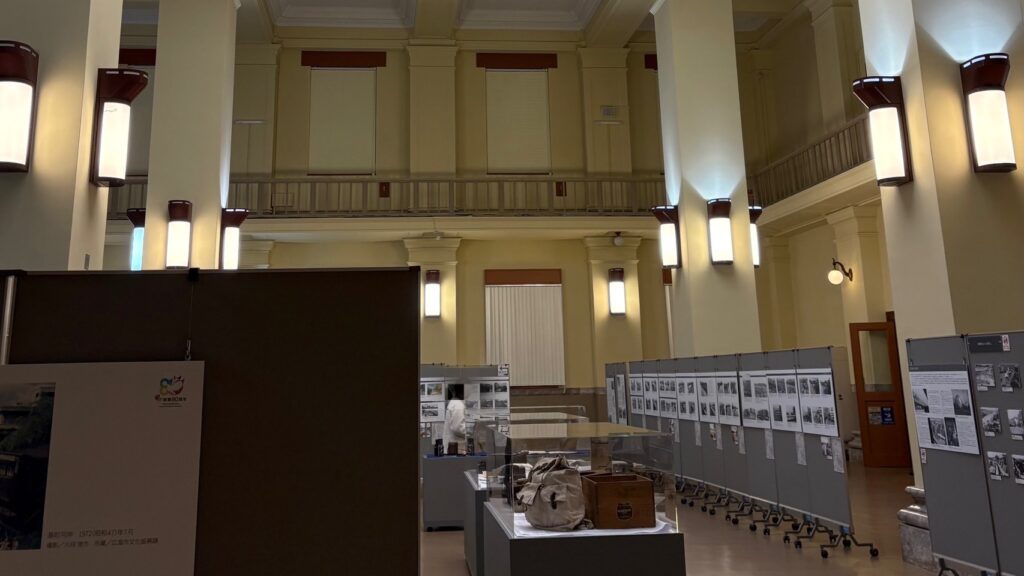
I was deeply moved by the sight of a child, probably around elementary school age, exploring the exhibits all by themselves. It seemed as though they had come here naturally, rather than specifically to use the building as a bank, and I felt that in Hiroshima, history isn’t treated as something separate and special, but quietly exists as part of everyday life. Hiroshima has many places that aren’t just “places you visit to learn,” but “places where you naturally encounter history while walking through the city.” I believe the Former Bank of Japan Hiroshima Branch is precisely one of those places.
It’s not just that the building fulfilled its role as a bank; it continues to be used today as a place where people visit, learn, and reflect. Seeing this, I felt strongly that this is precisely why the building deserves to remain a part of Hiroshima.
Soak in the echoes of history at Hotel Small World
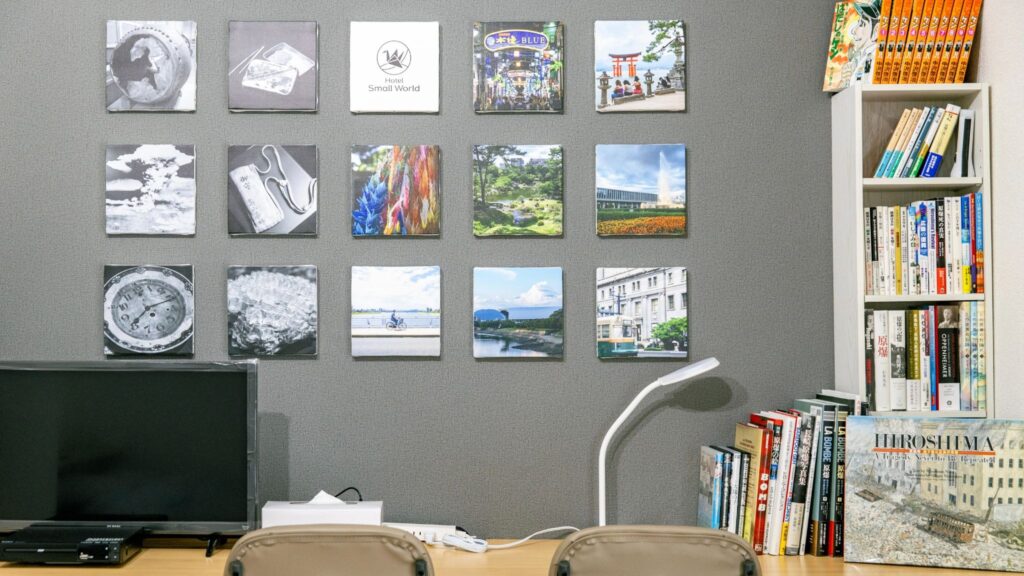
After immersing yourself in history and deepening your understanding at the former Bank of Japan Hiroshima Branch, we recommend taking some time at Hotel Small World to reflect on the path Hiroshima has taken.
The guest rooms at Hotel Small World feature materials and exhibits related to war and peace, allowing you to contemplate these themes in various ways—whether by looking at photographs, reading books, or watching DVDs.
One of the unique charms of this hotel is that it offers more than just a casual glimpse into Hiroshima’s history as a tourist; it provides a space to pause and reflect quietly. We believe this will be a moment where you can feel the power of Hiroshima’s recovery up close.
Located just an 8-minute walk from the former Bank of Japan Hiroshima Branch, the hotel is easily accessible and is the perfect spot for those looking to relax and unwind during their visit to Hiroshima.
Summary
The former Bank of Japan Hiroshima Branch building itself is very stylish and is also a beautiful example of modern architecture. However, when you actually approach it, its quiet presence naturally conveys how this building has protected Hiroshima and supported its reconstruction over a long period of time.
I believe it is a place where you can discover new insights and learn something new no matter how many times you visit.
When you visit Hiroshima, please be sure to stop by and experience the weight of time—a feeling unique to this building—and learn about the city’s journey toward reconstruction.


Recommend
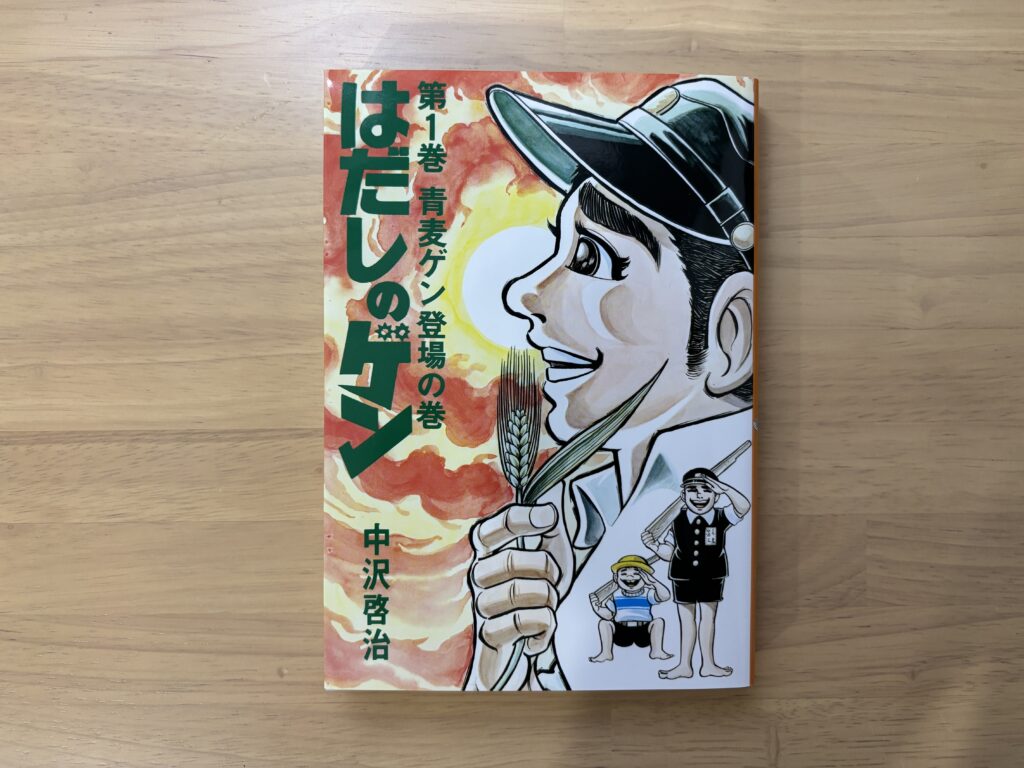
Learning About Hiroshima After the Atomic Bombing and the People Who Lived Through the Postwar Era Through Barefoot Gen
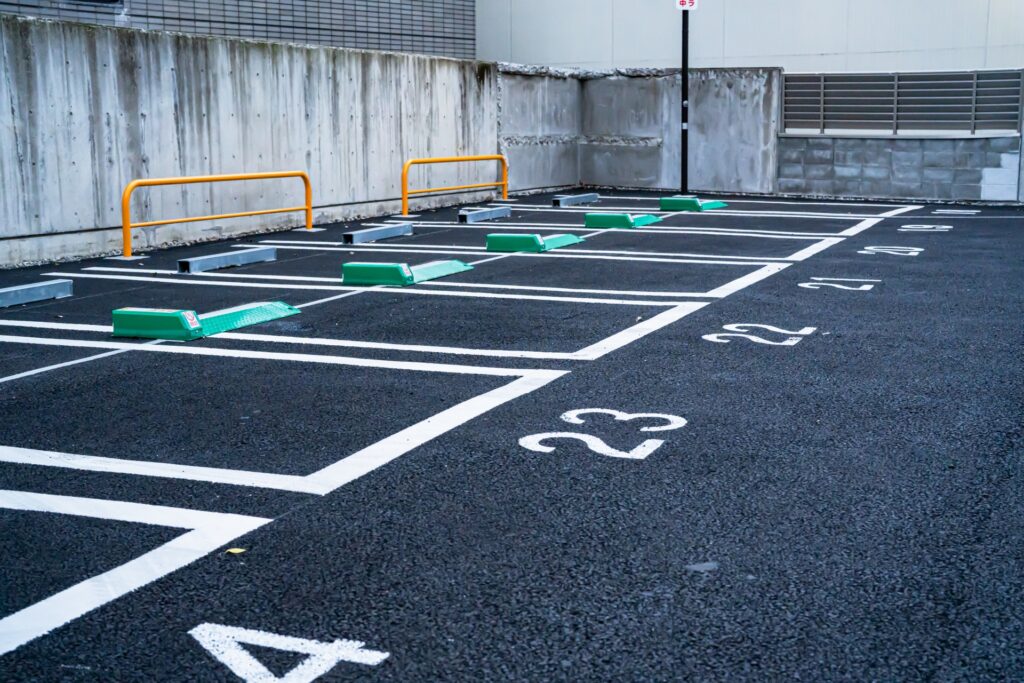
Here are some parking options, car-sharing services, and car rentals near Hotel Small World
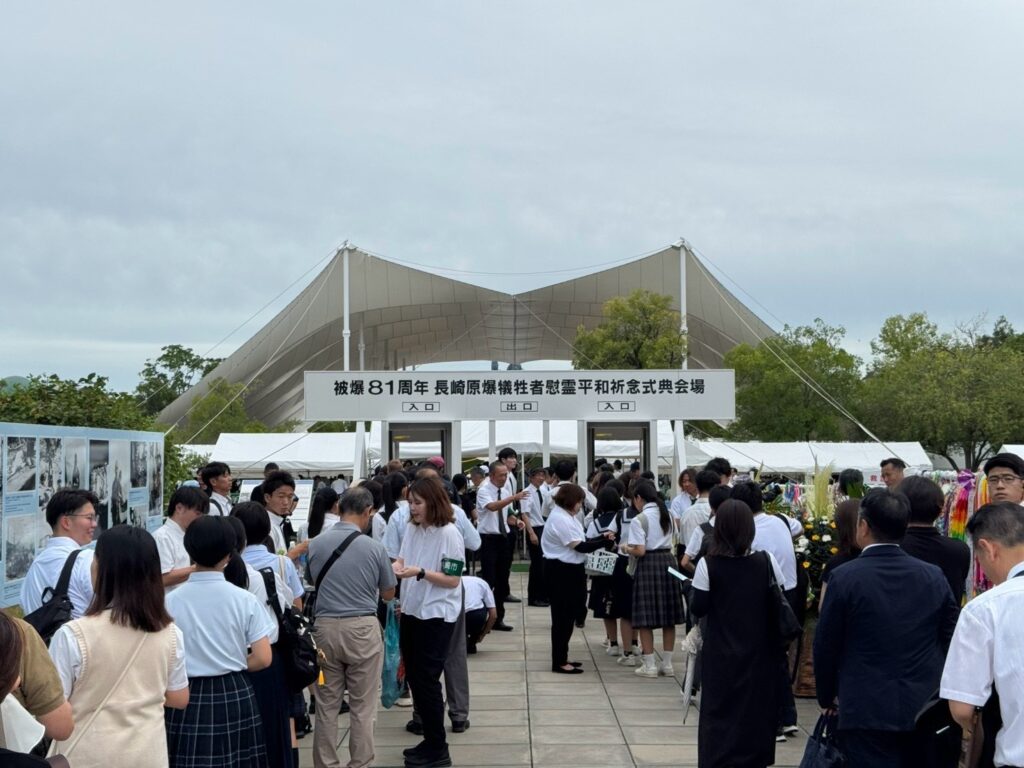
What Is the Nagasaki Peace Memorial Ceremony? — A Prayer for Peace from “The Last City to Suffer an Atomic Bombing”