Trams That Have Traveled Alongside the City of Hiroshima — The Charm of “Hiroden” That Only Locals Can Share
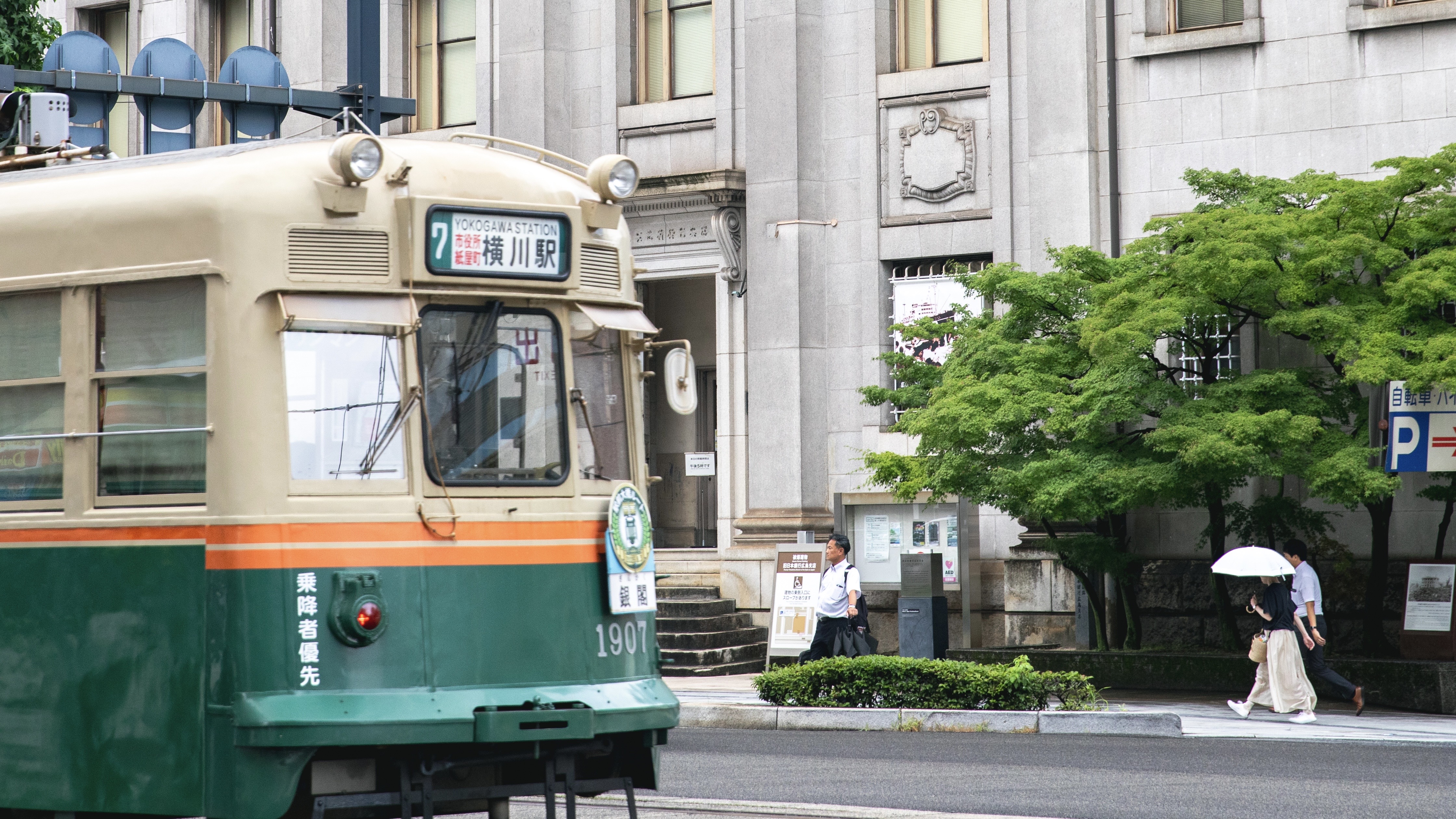
As you walk through the streets of Hiroshima, you’ll come across streetcars moving slowly through the city. With their clackety-clack sound, they blend seamlessly into people’s daily lives—a sight unique to Hiroshima.
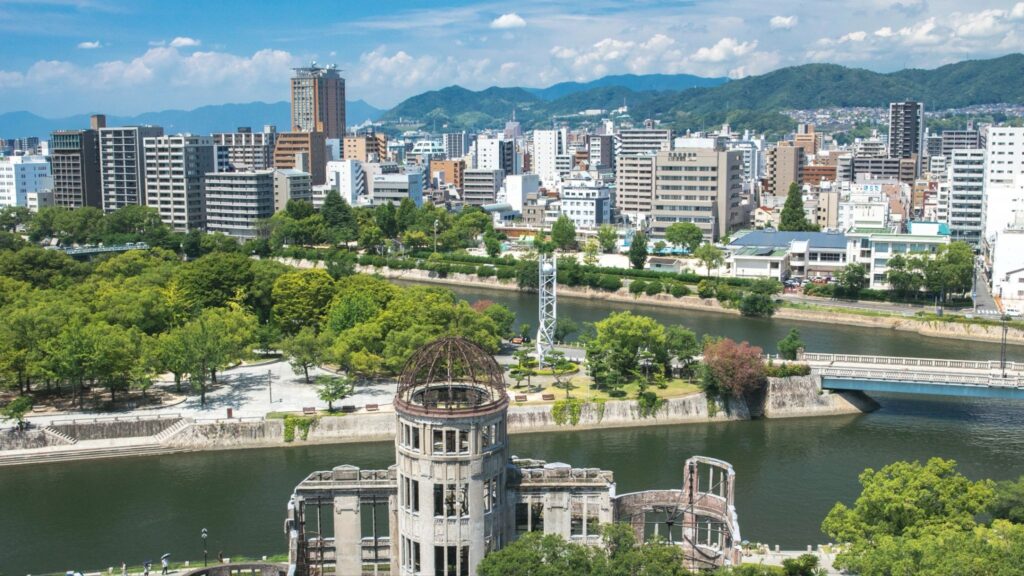
Affectionately known locally as “Hiroden,” the streetcars not only support the daily lives of residents but are also a convenient mode of transportation for tourists, as they connect Hiroshima’s iconic attractions—such as the Atomic Bomb Dome, Peace Memorial Park, and Miyajimaguchi.
However, Hiroden’s appeal goes beyond mere convenience. Having journeyed alongside the city of Hiroshima for over 100 years and overcome the history of the atomic bombing, these streetcars are imbued with the city’s memories. In this article, we’ll introduce the charm of Hiroden—beloved by locals—and its history.
The History of Hiroshima’s Streetcars
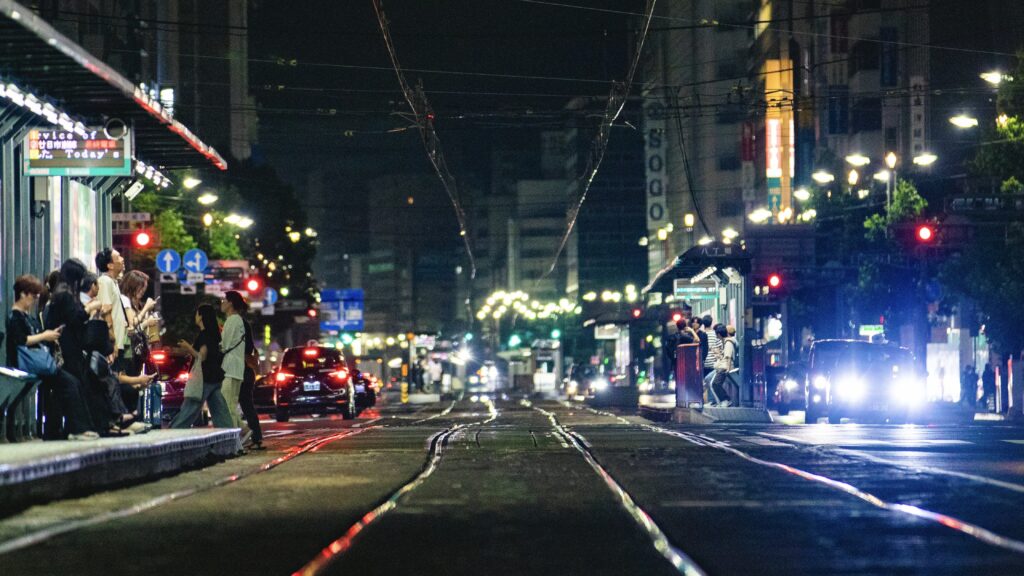
Hiroshima Electric Railway was founded in 1912 (the first year of the Taisho era). For over 100 years, it has continued to operate alongside the city’s development.
On August 6, 1945, when the atomic bomb was dropped on Hiroshima, 108 of the 123 streetcars running in the city were damaged, and Hiroshima Electric Railway also sustained extensive damage. Nevertheless, just three days later—while many people were still in the midst of chaos—service resumed on some sections of the line. It is said that the early resumption of service by the streetcars—a vital means of transportation—brought hope to many citizens.
Even today, streetcars that survived the atomic bombing are preserved and maintained, and they occasionally run through the city on special or regular routes. It is rare nationwide to find a city where streetcars retaining their original appearance from that era are still in active service, making Hiroshima Electric Railway a “living cultural asset” that conveys Hiroshima’s history to the present day.
Another attraction of Hiroshima Electric Railway is the opportunity to encounter a wide variety of trains, ranging from retro models to the latest types. Trains from various eras—including those acquired from across the country after the war, retro-designed models, and the latest ultra-low-floor vehicles—all run on the same tracks. Because of this, the system is sometimes called a “moving tram museum,” delighting not only railway enthusiasts but also many tourists.
Convenient Routes That Support Tourism in Hiroshima
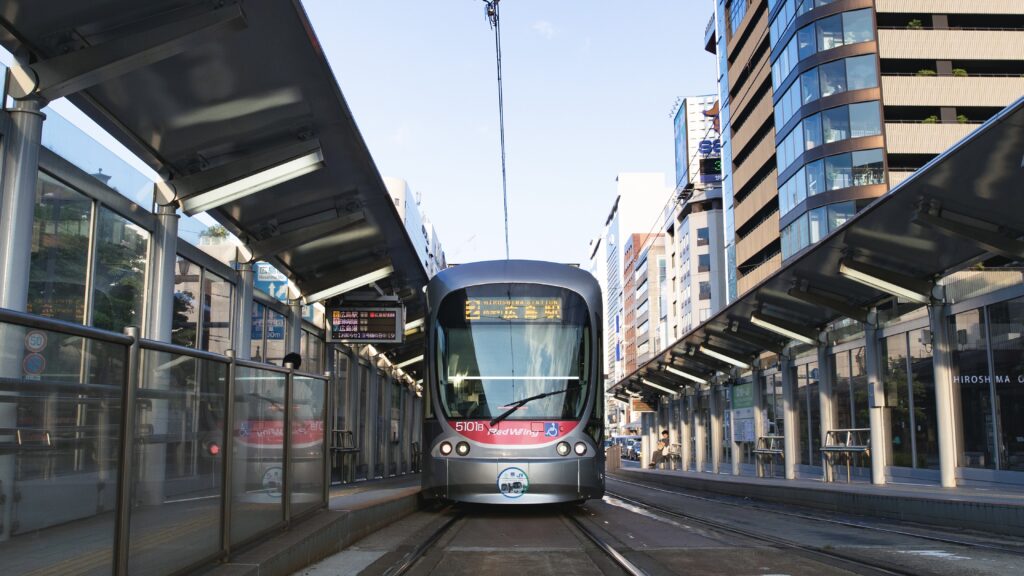
Hiroshima Electric Railway connects the city’s major attractions via a single network of lines.
Not only does it provide access from Hiroshima Station to central areas such as Hatchobori and Kamiyacho, but it also allows you to reach destinations like the Atomic Bomb Dome, Peace Memorial Park, Hiroshima Port, and the Yokogawa area with minimal transfers. Additionally, a popular route for traveling to Miyajima involves taking the streetcar to Miyajimaguchi and then transferring to a ferry. Although it takes a little longer, the journey itself becomes a memorable part of the trip as you can enjoy the cityscape and riverside views from the train window.
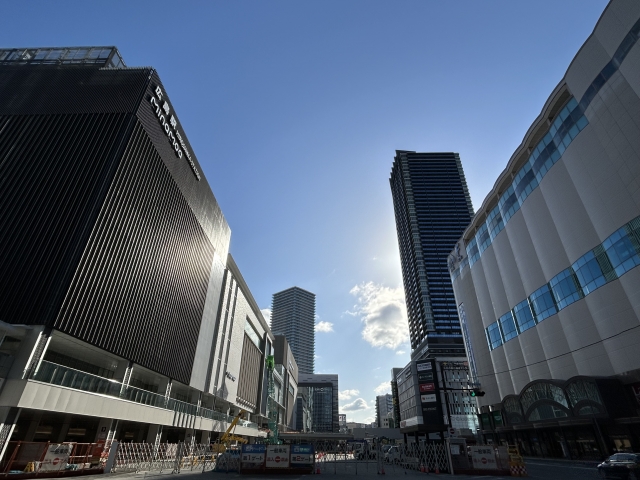
In 2025, the streetcar boarding area at Hiroshima Station was relocated to the second floor of the station building “minamoa.” This is the first such setup in Japan where streetcars enter the station building directly, making transfers to JR and Shinkansen lines much smoother—a major draw for both locals and tourists. Furthermore, with the opening of the Ekimae-Ohashi Route, travel time from Hiroshima Station to the Hacchobori and Kamiyacho areas has been reduced, making sightseeing in Hiroshima even more convenient.
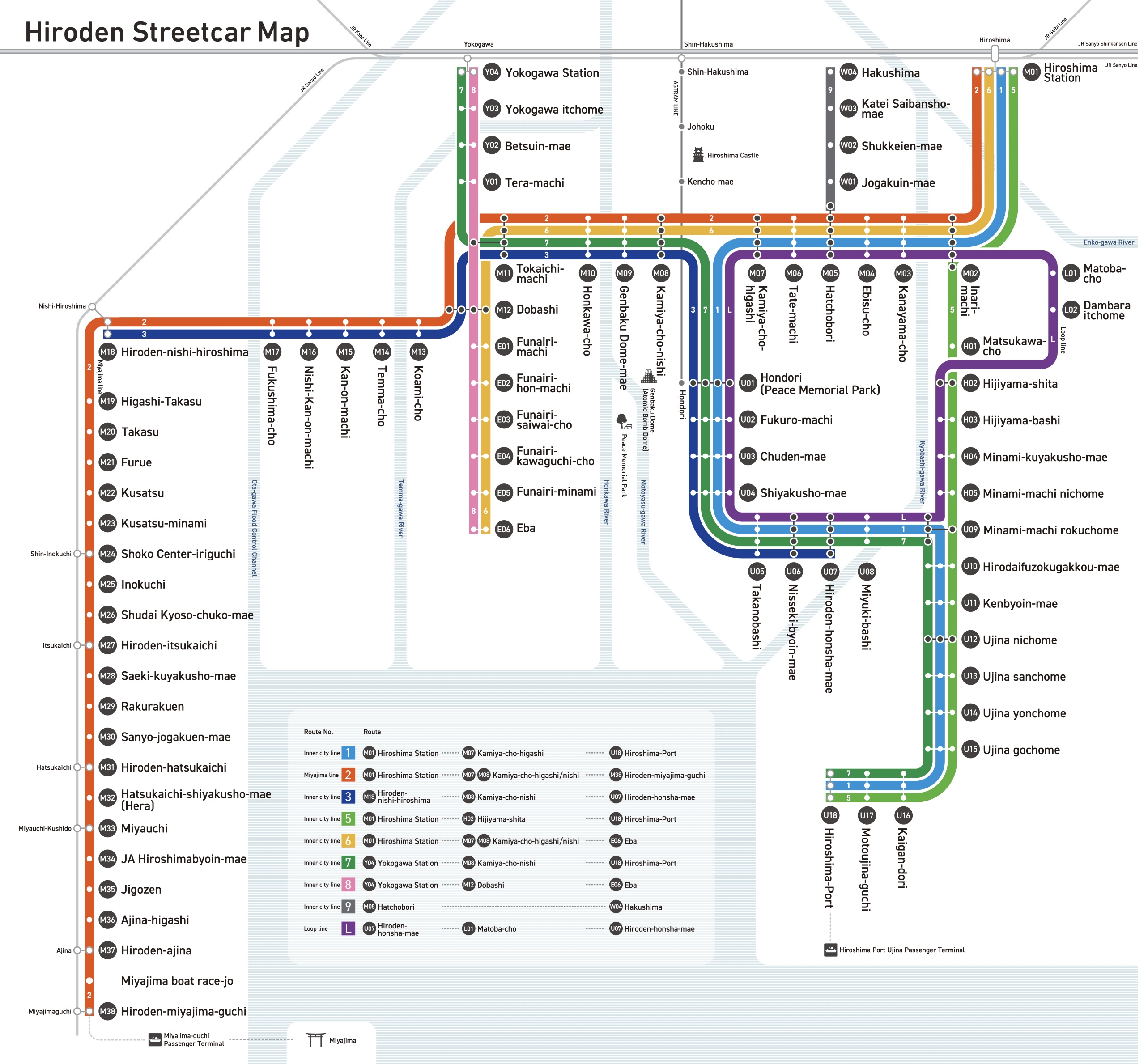
Source: Hiroshima Electric Railway Co., Ltd., “Hiroden Tram Route Map (Effective August 3, 2025, and thereafter)”https://www.hiroden.co.jp/train/route-guide/pdf/map-english.pdf?
How to Ride the Hiroden
Even if you’ve never ridden a streetcar before, the Hiroshima Electric Railway (Hiroden) is relatively easy to use.
First, at the stop, check the route number and destination displayed on the front or side of the streetcar before boarding. The fare is the same across all lines: 240 yen for adults and 120 yen for children. You pay the fare when you get off, and in addition to cash, the system accepts transportation IC cards and other payment methods.
For those planning to travel around the city multiple times, we recommend the “One-Day Tram Pass.” It offers unlimited rides on the entire Hiroden network for one day, making it very convenient when visiting multiple tourist spots such as the Atomic Bomb Dome, Peace Memorial Park, and Kamiyacho. Also, if you plan to venture out to Miyajima, choosing the “One-Day Tram and Ferry Pass,” which also covers the Miyajima-Matsuda Ferry, will allow you to enjoy sightseeing at a better value.
Experience a journey through Hiroshima’s history at Hotel Small World
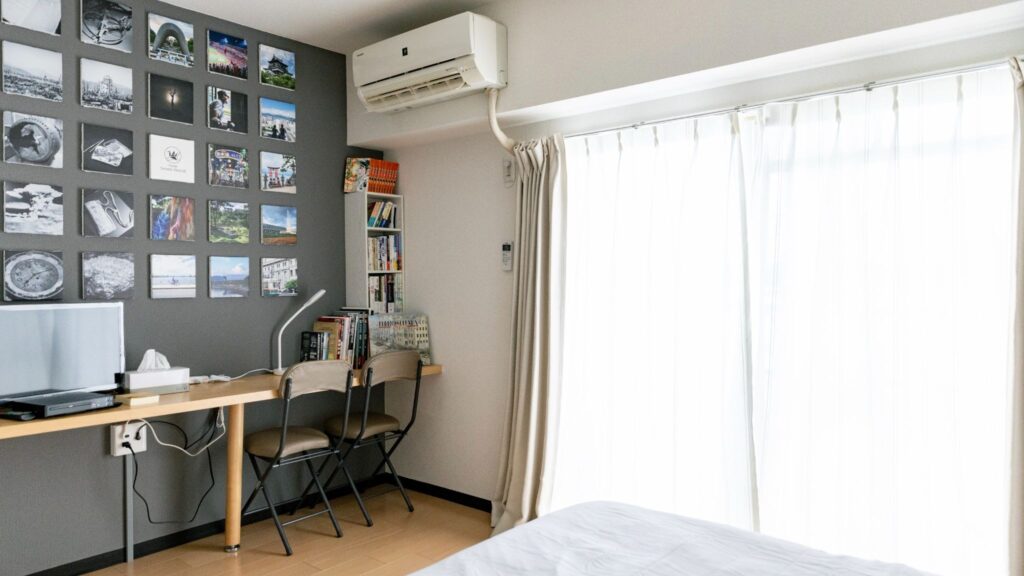
As you ride the Hiroshima Electric Railway and explore the city of Hiroshima, you’ll notice that history is alive and well throughout the city. That’s why, even after you’ve finished sightseeing, why not take some time to learn a little more about Hiroshima?
Hotel Small World is a hotel built around the concept of “peace.” The guest rooms feature books and DVDs on war and peace, as well as photographs and exhibits that convey the history of Hiroshima. We place great importance on creating a space that serves as a gateway to a deeper understanding of the scenery and history of Hiroshima that you’ve experienced during your trip.
It’s about an 8-minute walk from the hotel to the “Hacchobori” tram stop. With easy access to Hiroshima Station, the Atomic Bomb Dome, Peace Memorial Park, and Miyajima, the hotel is conveniently located as a base for sightseeing. As you explore Hiroshima by streetcar, we invite you to immerse yourself in the city’s history and its commitment to peace.
Summary
Hiroshima’s streetcars are more than just a means of transportation.
For over 100 years, they have supported the daily lives of citizens and continued to run even while overcoming the hardships of the atomic bombing; they are, in a sense, the very embodiment of Hiroshima’s history. The sight of retro and state-of-the-art cars running side by side on the same tracks, along with the unique scenery of streetcars moving slowly through the city, is one of the charms that can only be experienced in Hiroshima.
The Hiroshima Electric Railway turns even the time spent traveling to your destination into a memorable part of your journey. We invite you to enjoy a trip where you can experience Hiroshima’s daily life and history while gazing out the window at the cityscape passing by.