
What Is the Nagasaki Peace Memorial Ceremony? — A Prayer for Peace from “The Last City to Suffer an Atomic Bombing”
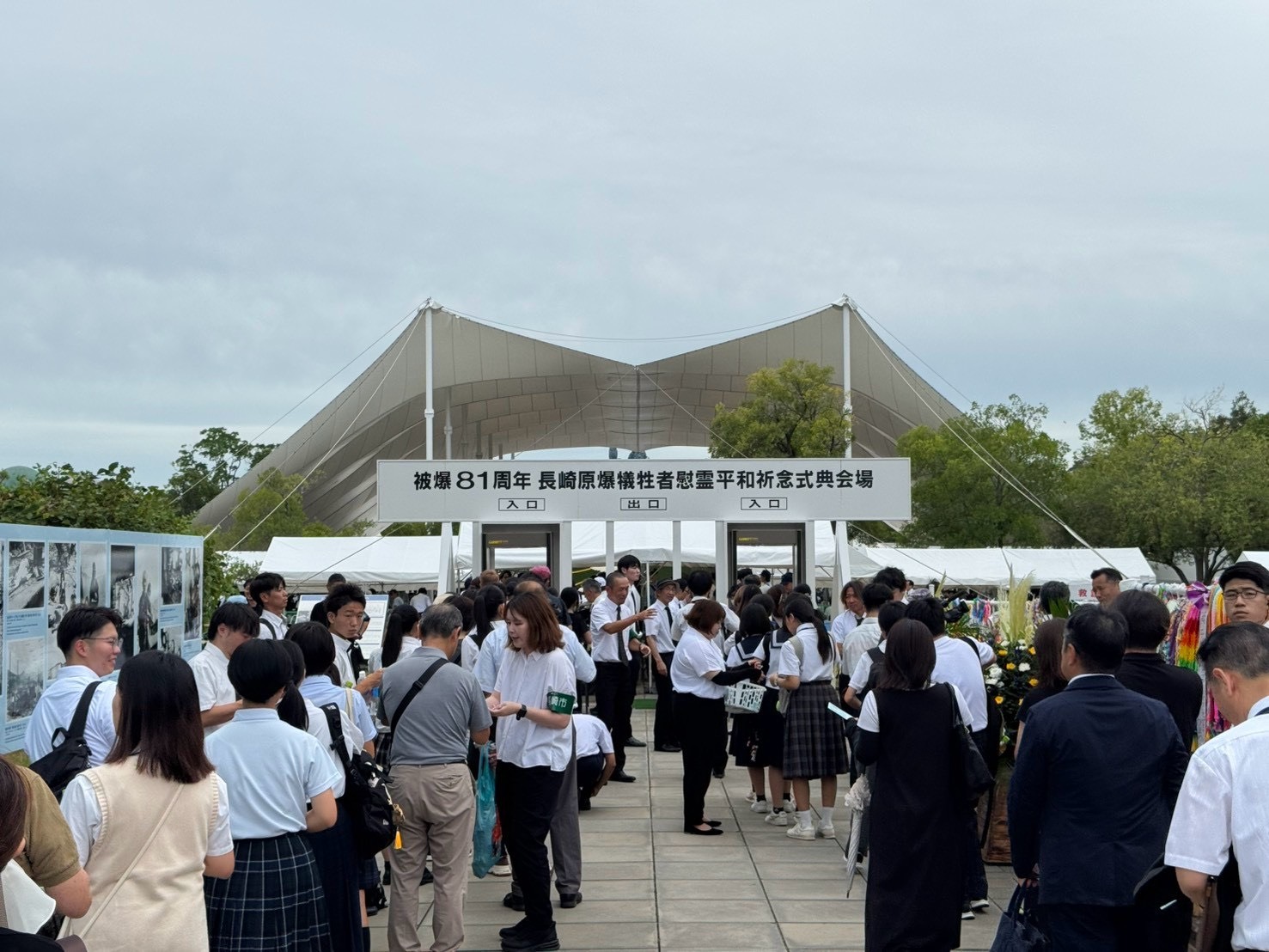
On August 9, the “81st Nagasaki Atomic Bomb Victims’ Memorial and Peace Commemoration Ceremony” was held at Peace Park in Nagasaki City.
At 11:02 a.m. on August 9, 1945, an atomic bomb was dropped on Nagasaki City, claiming many precious lives. Eighty-one years have passed since then.
Today, Nagasaki has fully rebuilt its cityscape from the devastating damage caused by the atomic bomb. At the same time, places throughout the city—including Peace Park and the Nagasaki Atomic Bomb Museum—remain to pass on the memory of the atomic bombing and carry the hope for peace into the future.
Taking this opportunity, I attended the Memorial Ceremony for the Victims of the Atomic Bombing held on August 9, 2026, and witnessed firsthand the state of Nagasaki City as it marked its 81st anniversary, as well as the ceremony itself.
Nagasaki’s efforts toward peace have been ongoing since 1948
The initiative to convey messages of hope for peace in Nagasaki on August 9 began in 1948, three years after the atomic bombing.
On August 9, 1948, with the permission of the GHQ Nagasaki Military Government Office, the City of Nagasaki hosted the “Cultural Festival Marking the Third Anniversary of the Atomic Bombing,” during which a peace declaration was delivered by representatives of the citizens.
Nagasaki City has continued to issue peace declarations ever since. In 1952, memorial services and other events that had previously been held in various parts of the city were consolidated into a single citywide event, and the “Nagasaki Atomic Bomb Victims’ Peace Memorial Ceremony” was held.
These efforts for peace, which began in this way, have been passed down to the present day, evolving over time. Official records of Nagasaki City preserve the peace declarations issued since 1948 to the present.
The 81st Annual Peace Memorial Ceremony
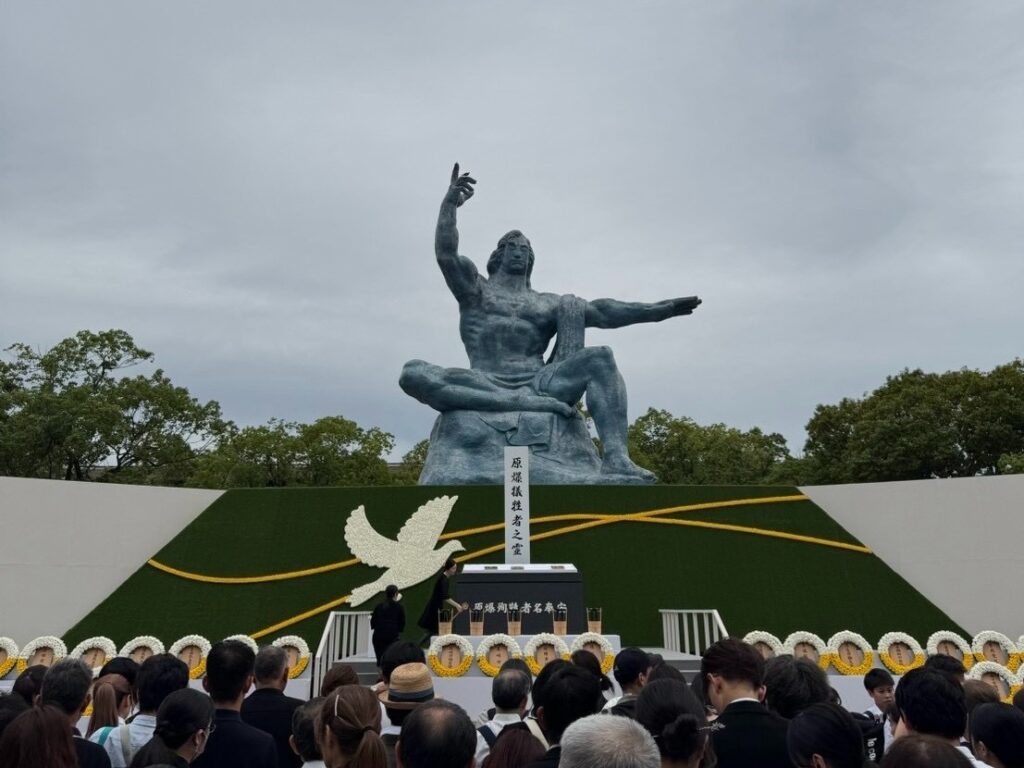
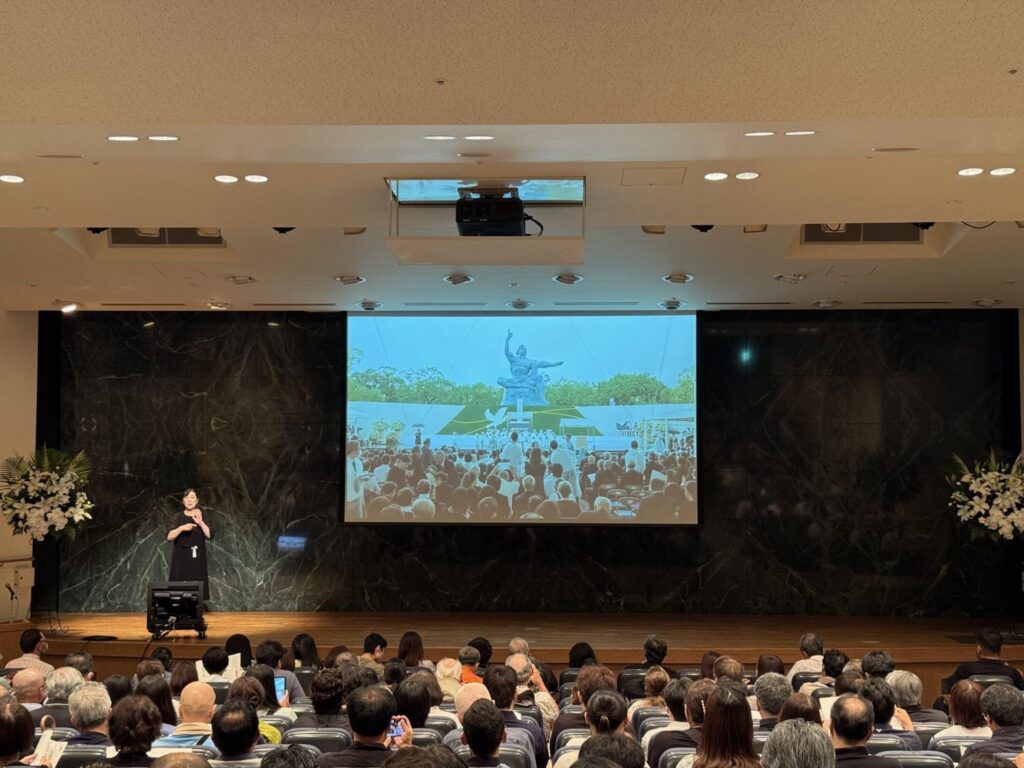
*The second photo shows the live broadcast venue in 2025.
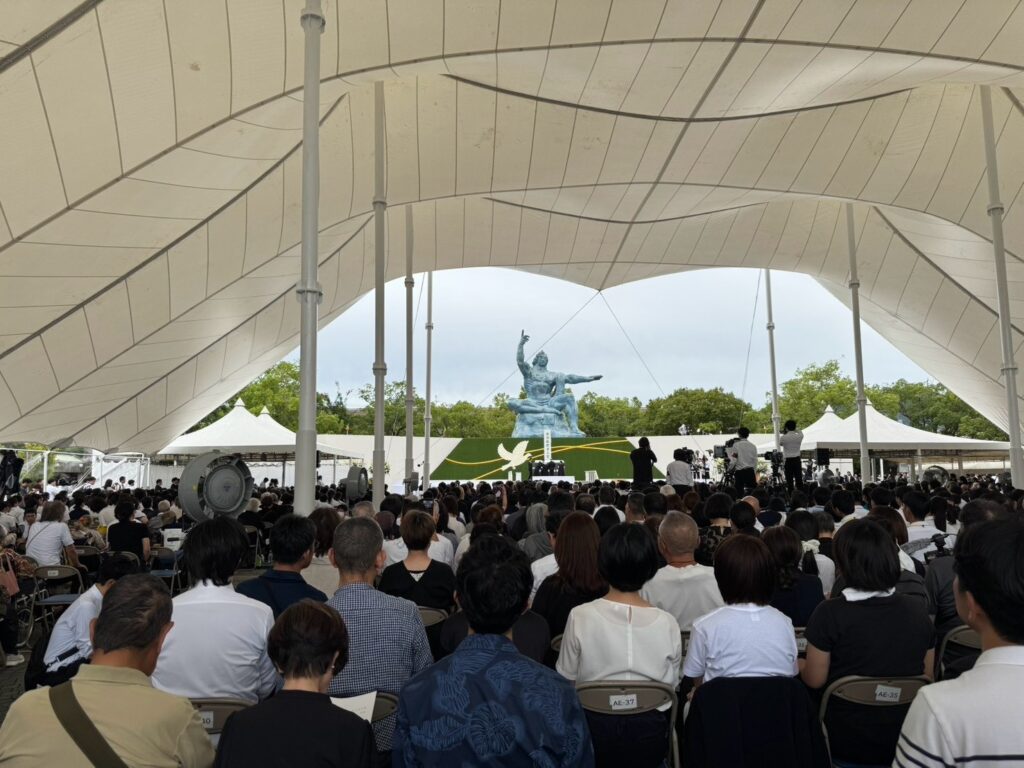
The 2026 ceremony was held from 10:45 a.m. to 11:45 a.m. on Sunday, August 9, at the plaza in front of the Peace Memorial Statue in Peace Park, Matsuyama-machi, Nagasaki City.
Although Typhoon No. 13 was approaching on the day of the event, it was determined that the wind would not affect the venue facilities, so the ceremony was held outdoors as scheduled.
The ceremony included the enshrinement of the Register of Atomic Bomb Victims, a commemorative address, the offering of water, and the offering of flowers. At 11:02 a.m., a moment of silence was observed to mark the time the atomic bomb was dropped. This was followed by the Nagasaki Peace Declaration, the “Pledge for Peace” delivered by a representative of the atomic bomb survivors, a children’s choir performance, and remarks by distinguished guests. The event concluded with a choral performance of “Senbazuru” (A Thousand Paper Cranes).
Visiting the venue in person, it gave the impression of being somewhat more compact compared to the Hiroshima Peace Memorial Ceremony.
While many elderly people were in attendance, there were also children and groups that appeared to be attending as school classes.
Unlike in Hiroshima, advance registration is required to enter the ceremony venue in Nagasaki. In 2026, registration closed on June 26, and admission tickets were mailed to applicants on July 17.
In addition, for those without admission tickets to the main venue or those who wished to watch the ceremony while avoiding the heat, live broadcasts (public viewings) were held on the day of the ceremony at facilities such as the Nagasaki Atomic Bomb Museum Hall and Dejima Messe Nagasaki. Many citizens and tourists visited the museum and satellite venues, where they were seen offering a moment of silence.
The ceremony held in the heat
Nagasaki is enveloped in intense heat during August.
At the venue that day, mist showers and other measures were set up to help attendees prevent heatstroke, and drinking water and cold wet towels were distributed.
When I actually visited, I was struck by the thoughtful consideration shown to those attending the ceremony in the heat, such as the mist fans and cold wet towels.
Although Nagasaki was covered in thick clouds from early morning that day, it is said that on August 9, 81 years ago, the sky was clear and the sun was shining brightly.
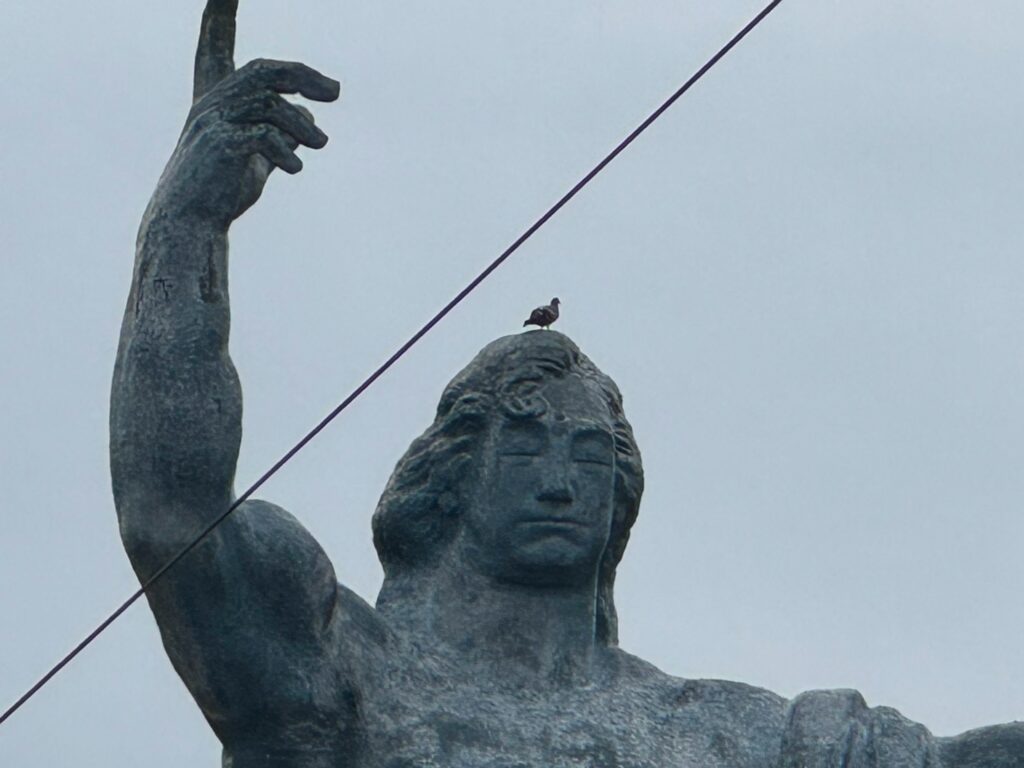
Looking up at the Peace Memorial Statue, I saw a single dove—a symbol of peace—perched atop its head.
Standing quietly beneath the thick, overcast sky, the statue seemed as if it were watching over peace.
“The foundation of peace is a heart that understands the pain of others.”
The 2026 Nagasaki Peace Declaration featured the words of the late Katsuji Yoshida, who was exposed to the atomic bomb at the age of 13 and continued to serve as a survivor witness despite suffering severe burns to his face.
“The foundation of peace lies in having a heart that understands human suffering.”
Centering on these words, the Mayor of Nagasaki expressed a strong sense of crisis regarding the current global situation surrounding nuclear weapons.
He also called on the Japanese government to participate as an observer in the Treaty on the Prohibition of Nuclear Weapons (TPNW) Review Conference and to uphold the Three Non-Nuclear Principles, urging efforts toward a world without nuclear weapons.
The message of peace emanating from Nagasaki is not merely a reflection on the events of 81 years ago.
Amid the conflicts and divisions that continue around the world today, how can we confront the suffering of others and build peace? This declaration posed that question anew.
The Power of “Dialogue,” as Told by a Representative of Atomic Bomb Survivors
The “Pledge for Peace” was delivered by Chiyoko Motomura, an 87-year-old representative of atomic bomb survivors.
Ms. Motomura was exposed to the atomic bomb at the age of six, approximately 4.5 km from the hypocenter. Although her grandmother saved her life by shielding her with her own body, the grandmother herself suffered severe burns to her back and passed away the following year.
Last winter, Ms. Motomura visited Los Alamos National Laboratory and Pearl Harbor in the United States. At Los Alamos—one of the places where the atomic bomb was developed—she spoke with local residents and shared her experience of feeling firsthand that “not a single person working here fails to wish for peace.” Furthermore, during her visit to Pearl Harbor, she reflected deeply, asking herself, “As I gaze at the calm sea, why did the war begin, and why did so many lives have to be taken?”
It is “dialogue”—seeking to understand one another across national and ideological divides, rather than simply blaming one side—that leads to mutual understanding. With this conviction, Mr. Motomura stated, “Peace means protecting life, and life must take precedence above all else,” and expressed his strong determination to continue advocating for peace for as long as he lives.
A Wish for Peace Passed Down to the Next Generation
What left a particularly strong impression on me at the ceremony was the presence of the younger generation.
At the 2026 ceremony, two third-year students from Nagasaki Prefectural Nagasaki North High School served as emcees.
In addition, the children’s choir sang “That Child,” a song with lyrics written by Takashi Nagai—a doctor who survived the atomic bombing of Nagasaki—and the ceremony concluded with a chorus of “A Thousand Paper Cranes.”
As the atomic bomb survivors grow older and it becomes increasingly difficult for them to pass on their experiences firsthand, children and high school students are participating in the ceremony and carrying on the spirit of peace.
In their presence, I could sense Nagasaki’s ongoing efforts to pass these memories on to future generations.
The Peace Memorial Statue and a spot overlooking the city of Nagasaki
Peace Park is situated within the undulating terrain that characterizes the city of Nagasaki.
As you head toward the site of the Peace Memorial Statue, you can sense that it is situated on a hill, slightly higher than the surrounding cityscape.
While it is usually a place where one can spend time in a calm atmosphere, somewhat removed from the hustle and bustle of the city, on August 9, large crowds gather, and the park is enveloped in a sense of tension unlike any other day.
Outside the ceremony venue, various civic groups were chanting slogans reflecting their own views.
While some people were quietly offering prayers inside the venue, others outside were voicing their concerns from their respective perspectives.
That scene was also one of the impressions I took away from Nagasaki’s Peace Park.
Ten Years After the Atomic Bombing: The Peace Memorial Statue Was Erected
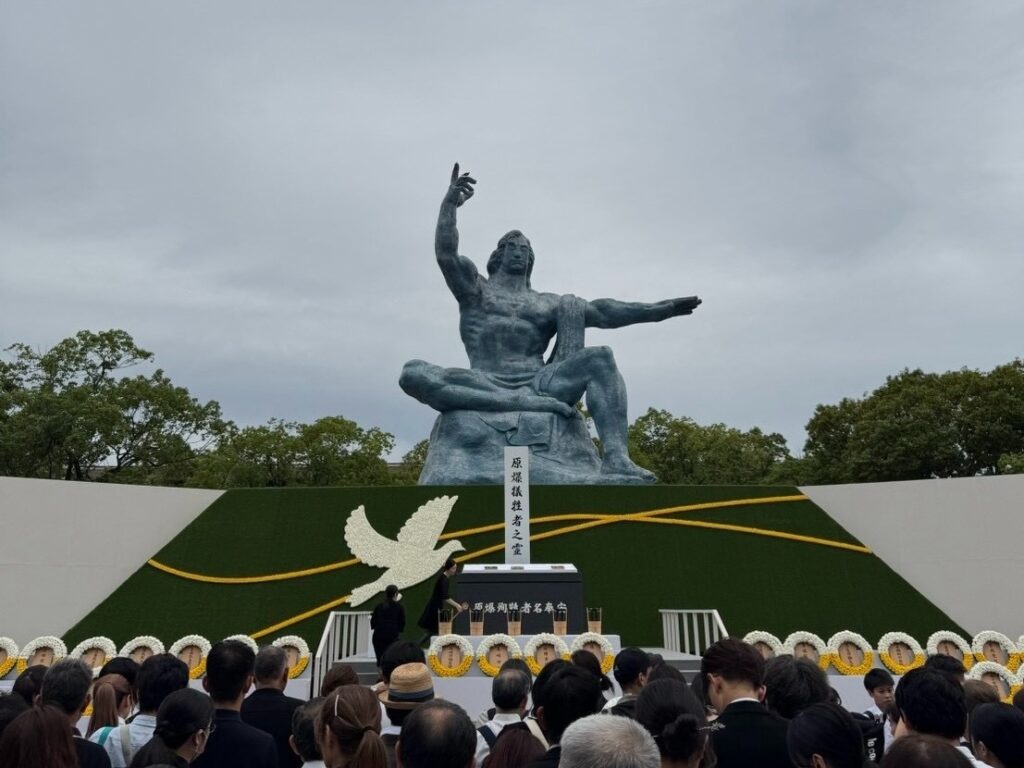
When you visit Peace Park, be sure to take a look at the “Peace Memorial Statue,” which stands at the center of the ceremony grounds.
The Peace Memorial Statue was created by sculptor Seibo Kitamura and unveiled on August 8, 1955—the day before the 10th anniversary of the atomic bombing.
Standing approximately 9.7 meters tall, the statue symbolizes the threat of the atomic bomb with its right hand pointing toward the sky and peace with its left hand extended horizontally.
Erected to mark the 10th anniversary of the atomic bombing, this statue continues to welcome visitors as a symbol of peace in Nagasaki.
Every year on August 9, prayers for the victims and pledges for peace are offered in front of this Peace Memorial Statue.
If you’re visiting Hiroshima, stay at Hotel Small World
When visiting Nagasaki, why not take the opportunity to visit Hiroshima, another city that suffered an atomic bombing?
By actually walking through the streets of both Hiroshima and Nagasaki and learning about the history of the atomic bombings and the cities’ paths to recovery, you may gain a deeper appreciation for the message of peace that these two cities continue to convey.
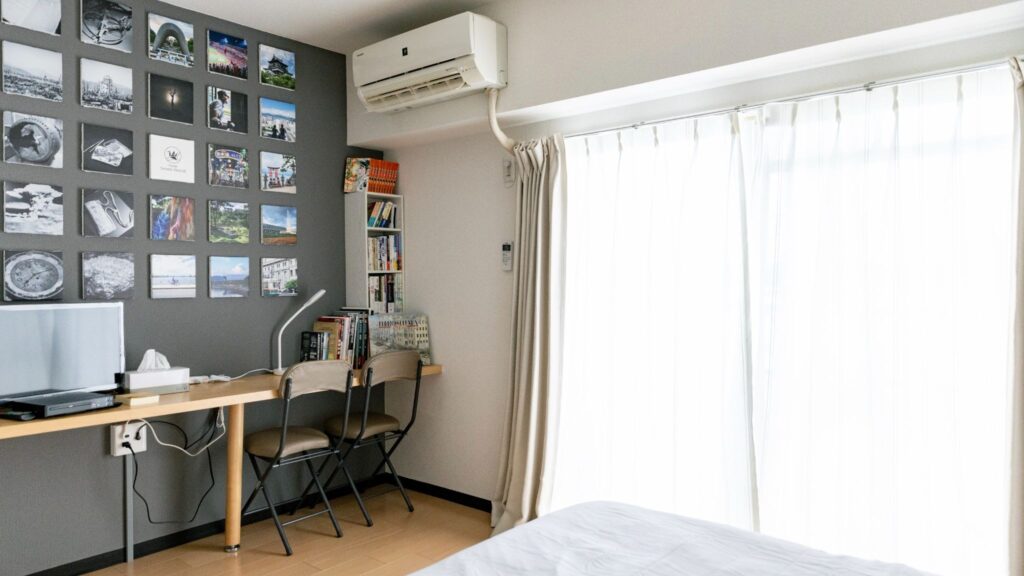
Hotel Small World, located in Hiroshima, is a hotel built around the concept of “peace.” Guest rooms are equipped with materials and reference books that help guests learn about the damage caused by the atomic bombing and the history of Hiroshima’s recovery.
Accommodations in Hiroshima tend to fill up quickly around the time of the Peace Memorial Ceremony on August 6, so if you plan to stay there, we recommend making your reservation well in advance.
Why not explore the history of both Nagasaki and Hiroshima, and then spend some quiet time at the hotel reflecting on “peace”?
Summary
August 6 in Hiroshima, August 9 in Nagasaki.
In these two cities that suffered atomic bombings, prayers for the victims and pledges for peace are offered every year at their respective sites.
In Nagasaki, the efforts for peace that began in 1948 continue to this day, 81 years later.
High school students serve as emcees, children sing, and atomic bomb survivors share their personal experiences. There, one could see people striving to pass on the memories of the past to the future.
So that the wish for “Nagasaki to be the last city to suffer an atomic bombing” does not become merely a thing of the past.
When you visit Nagasaki, why not take a trip to Peace Park and experience with your own eyes both the memories that have been passed down at this site and the city of Nagasaki as it is today?


Recommend
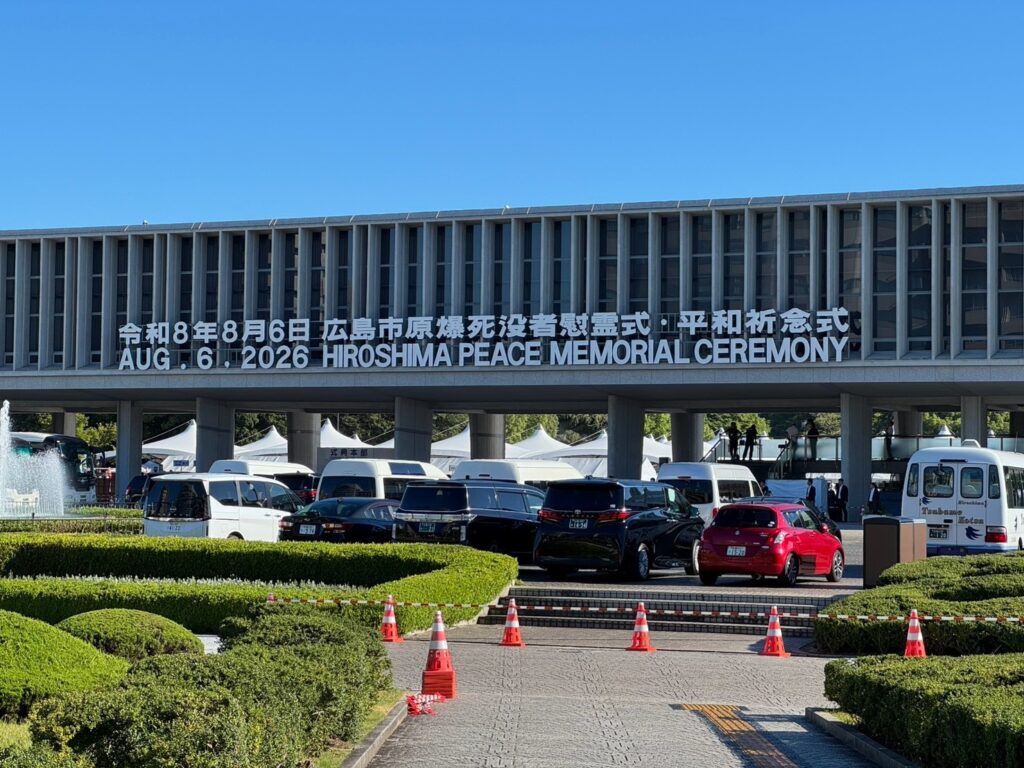
What Is the Hiroshima Peace Memorial Ceremony? — Prayers for “Peace” Passed Down Through the Generations
About one month after the atomic bombing, another tragedy struck Hiroshima: the “Makurazaki Typhoon”
It’s Not Just the Atomic Bomb: The 400-Year History of the City of Hiroshima