
About one month after the atomic bombing, another tragedy struck Hiroshima: the “Makurazaki Typhoon”
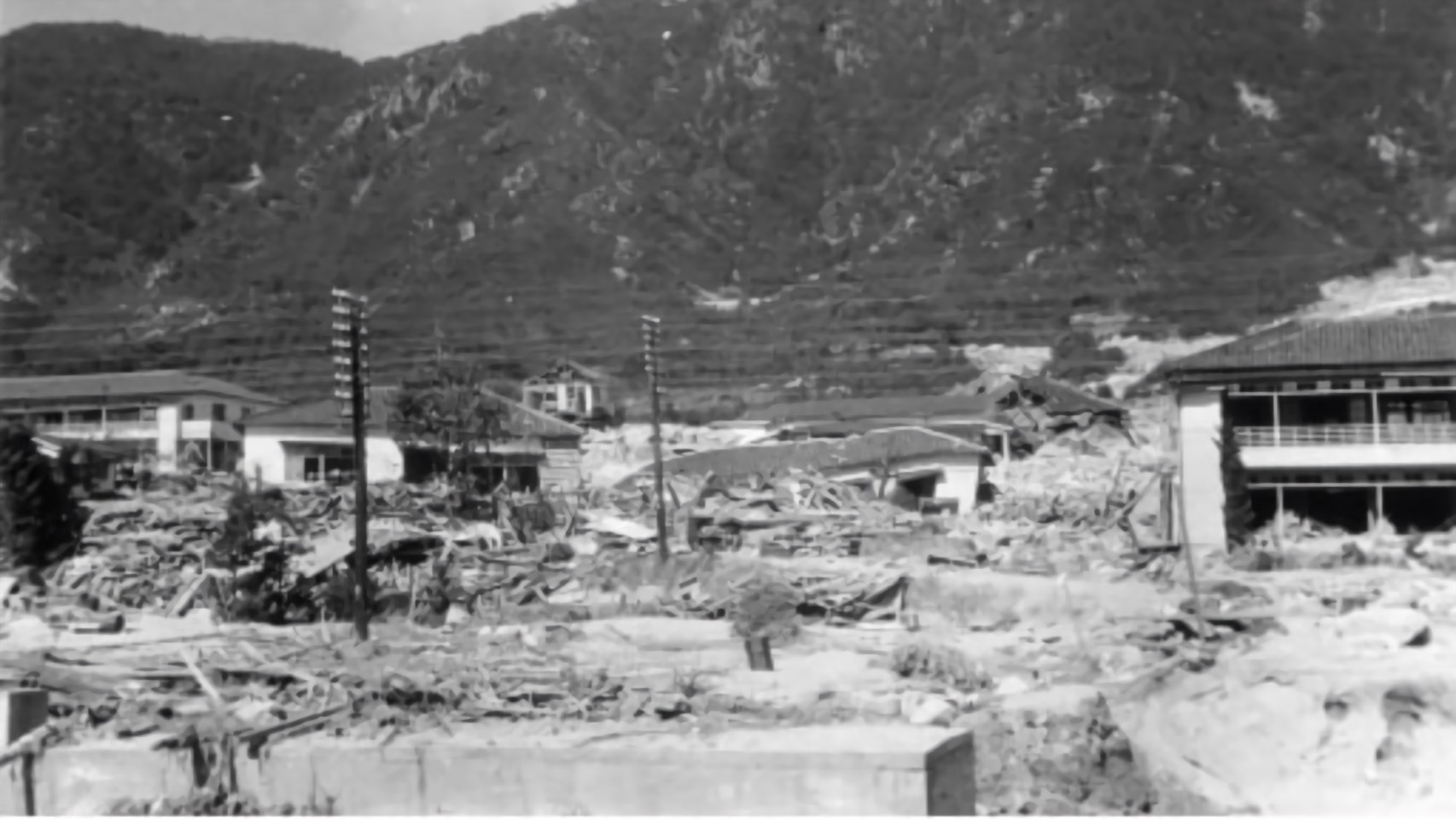
Source: Hiroshima Peace Media Center, “Peace Seeds: Seeds Sown by Hiroshima’s Teens (Issue No. 16)—The ‘Makurazaki Typhoon’ That Struck Immediately After the End of the War”
(https://www.hiroshimapeacemedia.jp/?p=50124)
When discussing the history of Hiroshima, I believe what comes to mind for many people is August 6, 1945—the day the atomic bomb was dropped.
It was the first time in the world that an atomic bomb had been dropped; in an instant, the city was reduced to a scorched wasteland, and countless lives were lost. That memory continues to be passed down to the world today through the Peace Memorial Park and the Atomic Bomb Dome.
However, the hardships Hiroshima endured did not end there.
On September 17, 1945—about one month after the atomic bombing—Hiroshima was struck by the “Makurazaki Typhoon,” considered one of the three major typhoons of the Shōwa era. Lives that had finally been saved were lost once again due to this natural disaster.
Although not widely known, this event is also an indispensable part of Hiroshima’s history.
In this article, we will introduce the “Makurazaki Typhoon,” which struck Hiroshima about one month after the atomic bombing, and the little-known events that unfolded during it.
The major typhoon that struck Hiroshima immediately after the atomic bombing
On September 17, 1945, Typhoon Makurazaki made landfall in Kyushu and caused extensive damage throughout western Japan. In Hiroshima Prefecture as well, landslides and floods occurred in various areas, and it is estimated that approximately 2,000 people lost their lives.
At that time, the city of Hiroshima had suffered severe damage from the atomic bombing, which had significantly impaired the city’s basic functions. Not only were roads and bridges destroyed, but the communications network had also sustained catastrophic damage; as a result, it is believed that information warning of the typhoon’s approach did not reach residents adequately. Evacuation and preparedness measures to prevent damage were difficult to implement, and torrential rains triggered mudslides and floods that exacerbated the damage across the region.
Furthermore, at that time, there were many people who had lost their homes due to the atomic bombing and were forced to live or take shelter in areas such as riverbanks. Compounded by these circumstances, the damage caused by the torrential rains and rising water levels became even more severe.
A Tragedy at a Hospital That Treated Atomic Bomb Survivors
One of the locations that suffered particularly severe damage was the Ono Army Hospital, located in what is now Hatsukaichi City.
Many patients who had been exposed to the atomic bomb in Hiroshima City were transported to this hospital, where they continued to receive treatment. In addition, the Kyoto University Comprehensive Research Team on Atomic Bomb Disaster Effects used this facility as its base to provide medical care to atomic bomb survivors and conduct research on the health effects of the atomic bomb.
However, on the night of September 17, torrential rain triggered a landslide, and a massive mudslide struck the hospital.
The buildings were swept away, and 156 people lost their lives, including hospitalized patients, hospital staff, and 11 members of the Kyoto University research team who had been dispatched from Kyoto to treat and study the atomic bomb survivors.
It was not only the survivors of the atomic bombing who perished. Even the doctors and researchers who were trying to save lives fell victim to this disaster.
Every September, memorial services organized by Kyoto University, bereaved families, and local community members continue to this day, and this event has become one that many people will never forget.
Learn More About Hiroshima’s History at Hotel Small World
Hotel Small World is conveniently located near spots where you can learn about Hiroshima’s history, including the Peace Memorial Park and the Atomic Bomb Dome.
When visiting Hiroshima, there are many opportunities to learn about the history of the atomic bombing. At the same time, the city is home to numerous lesser-known stories, such as its post-bombing reconstruction and the Makurazaki Typhoon, which we’ve introduced here.
At our hotel, we provide books and materials related to the atomic bombing and peace in each guest room, creating an environment where you can deepen your understanding of Hiroshima’s history even after exploring the city. By reading these materials while reflecting on the places you’ve actually visited, you’ll be able to gain a deeper understanding of each event.
We hope that during your stay, you’ll also come to appreciate the journey of Hiroshima—a story that cannot be fully told by the atomic bombing alone.
Summary
The history of Hiroshima cannot be fully told by focusing solely on the atomic bombing of August 6, 1945.
The Makurazaki Typhoon, which struck about a month later, claimed the lives of not only those who had survived the bombing but also the medical professionals and researchers who were trying to save them. Despite facing the dual hardships of war and natural disaster, Hiroshima has continued to move forward, step by step, on the path to recovery.
When you visit Hiroshima, please take the time to explore not only the famous tourist spots but also the lesser-known history behind them. Learning about these events will surely help you gain a deeper understanding of this city.


Recommend
What Is the Nagasaki Peace Memorial Ceremony? — A Prayer for Peace from “The Last City to Suffer an Atomic Bombing”
What Is the Hiroshima Peace Memorial Ceremony? — Prayers for “Peace” Passed Down Through the Generations
It’s Not Just the Atomic Bomb: The 400-Year History of the City of Hiroshima