How to Get Around Hiroshima | A Complete Transportation Guide for Tourists
Hiroshima is one of Japan’s most compact, accessible, and traveler-friendly cities. Unlike larger metropolitan areas such as Tokyo or Osaka, Hiroshima offers a transportation system that is easy to understand even for first-time visitors to Japan. Public transportation is reliable, signage is clear, and most major attractions are located within a relatively small area. As a result, visitors can explore the city comfortably without renting a car.
This guide explains how to get around Hiroshima as a tourist, the best way to travel within the city, and how to move efficiently between major sightseeing areas. It also answers common questions such as whether Hiroshima is easy to get around and what transportation options are most suitable for international travelers.
Overview: Getting Around Hiroshima as a Tourist
Hiroshima’s city center is relatively small and well organized, which makes transportation simple even for travelers visiting Japan for the first time. Most major attractions, shopping districts, restaurants, and hotels are concentrated in central areas and connected by public transportation. Because of this compact layout, it is rare to spend long periods traveling between sights.
Visitors mainly rely on four methods of transportation in Hiroshima: JR trains, Hiroshima streetcars (also known as trams), local buses, and ferries—along with walking.
For many tourists, Hiroshima feels noticeably easier to navigate than other Japanese cities. Routes are straightforward, fares are reasonable, and English signage is widely available. This makes Hiroshima an excellent destination for travelers who want a smooth and stress-free sightseeing experience.
JR Trains in Hiroshima: The Easiest Way to Travel Around
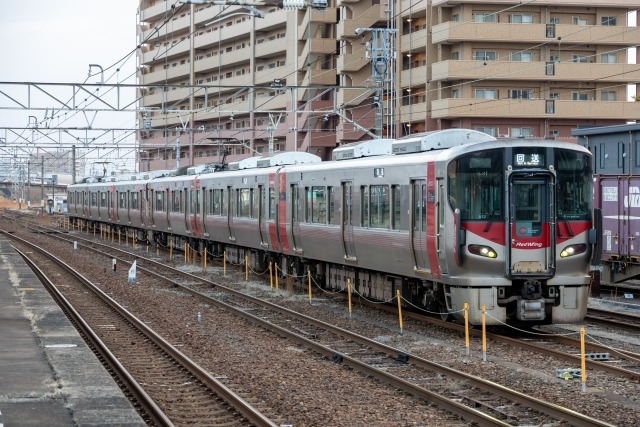
JR trains provide fast and reliable connections to Hiroshima from other cities and to nearby destinations. While streetcars handle most city-center travel, JR lines are useful for regional trips and day excursions.
JR Hiroshima Station: The Main Transportation Hub
JR Hiroshima Station is the city’s primary transportation hub and the main entry point for travelers arriving from other regions of Japan. The station is served by the Sanyo Shinkansen, which connects Hiroshima with major cities such as Osaka, Kyoto, and Fukuoka (Hakata). Several JR local lines also operate from the station, providing access to suburban areas and neighboring cities.
Although Hiroshima Station is located slightly east of the city center, it is well connected to downtown areas by streetcars and buses. Transfers are clearly marked, English signage is widely available, and ticket machines support multiple languages. For international visitors, the station is easy to navigate and well equipped for smooth transfers.
How to Ride the JR Trains
Riding JR trains in Hiroshima is straightforward and convenient for both first-time visitors and experienced travelers. Passengers board from each platform, and tickets can be purchased from machines or ticket counters. As of 2025, fares are based on distance traveled, and passengers can pay with cash, IC cards such as Suica, ICOKA, SUGOCA or PASMO, or JR Pass if applicable.
Inside the trains, route maps and station names are clearly displayed in English, and announcements help travelers know the next stop. JR trains are faster than streetcars and buses, making them ideal for longer trips within Hiroshima or to nearby destinations like Miyajima.
For more details:
Riding the Train – The Basics (JR WEST)
Hiroshima Streetcars (Trams): The Best Way to Explore the City
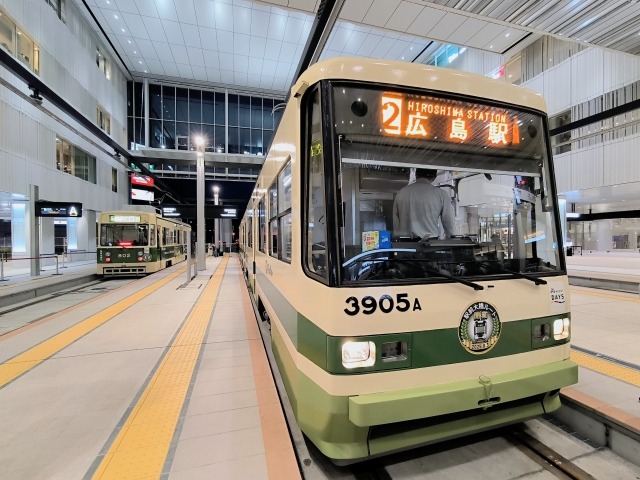
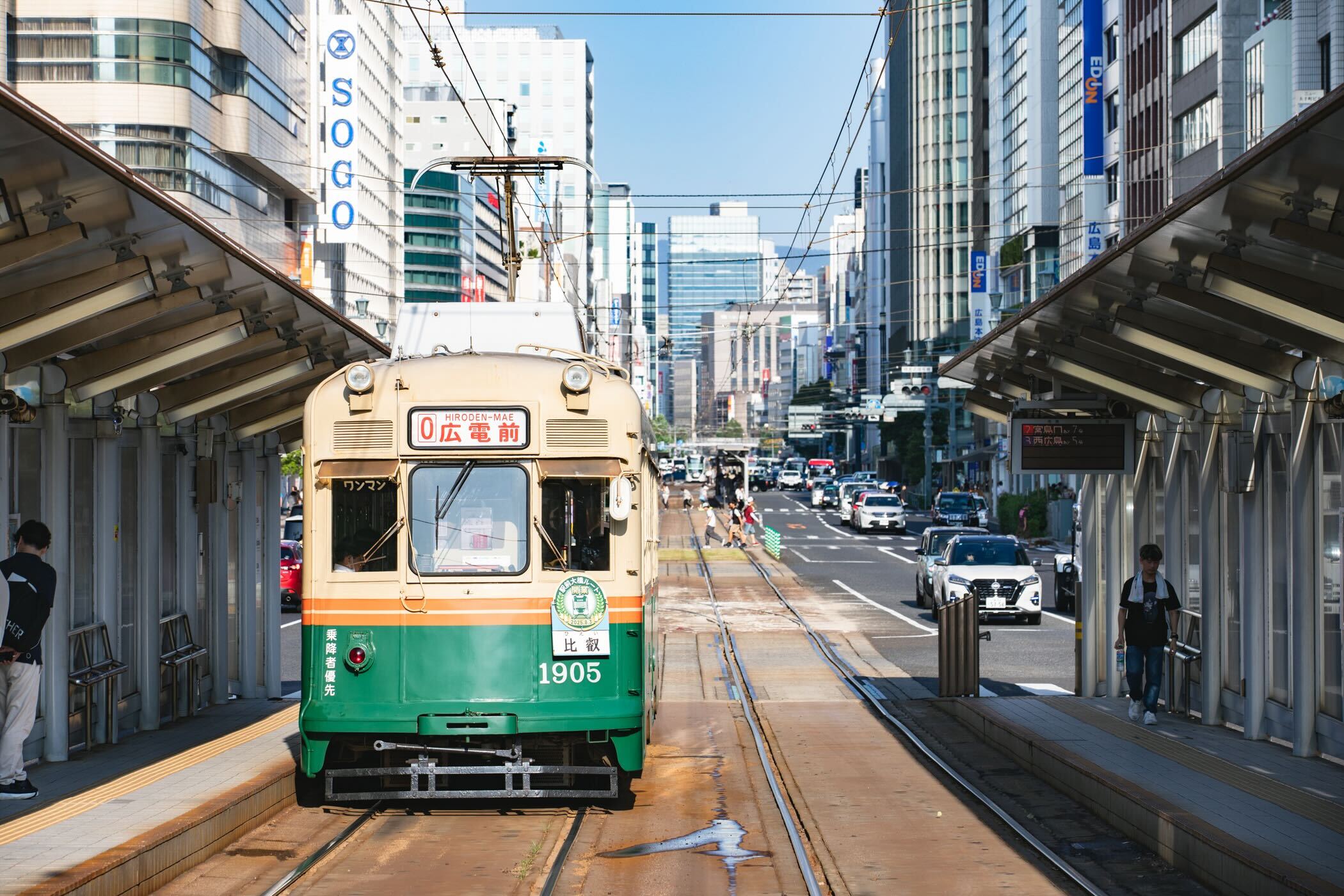
Hiroshima’s streetcars are the primary way to get around the city center. They connect major sightseeing spots, shopping areas, and key transportation hubs, making them ideal for everyday travel within Hiroshima. For most visitors, streetcars are the easiest and most stress-free way to explore the city.
What Is the Hiroshima Streetcar?
Hiroshima has a large and well-developed streetcar network. Trams cover key areas such as Hiroshima Station, Peace Memorial Park, Hondori Shopping Street, and downtown neighborhoods. The system operates frequently, and waiting times are usually short. Signage and route maps inside the trams are displayed in English, making it easy for international travelers to understand their journey.
Streetcars allow visitors to experience the city from above ground, offering scenic views of streets, rivers, and neighborhoods as they travel. Riding a tram is not only convenient but also adds a sense of charm to exploring Hiroshima.
A few trams that survived the atomic bombing are still in active service today. If you’re lucky, you might get to ride one.
How to Ride the Hiroshima Tram
Riding a Hiroshima streetcar is simple and beginner-friendly. On most trams, passengers board from the rear door and exit from the front, but some vehicles allow boarding and alighting from multiple doors. Fares are flat for the entire line, with adults paying 240 yen and children 120 yen (as of 2025). Payment is made upon exiting, either in cash or with an IC card, so there is no need to calculate distance-based charges.
Inside the tram, route maps and stop names are clearly displayed in English, and announcements help travelers know when to get off. The moderate speed of the trams also allows passengers to enjoy city views during their ride.
For more details:
How to Ride the Streetcar (Hiroshima Electric Railway)
Hiroshima Buses: A Convenient Way to Reach Suburban Area
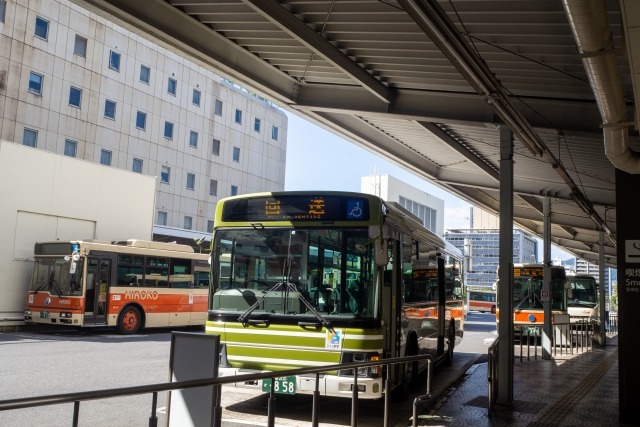
Buses in Hiroshima complement the streetcar network by serving neighborhoods and destinations not covered by trams. They are especially useful for residential areas, suburban attractions, and locations outside the city center.
While buses are safe, punctual, and reliable, they can be more challenging for first-time visitors due to multiple routes and stops. English signage is limited compared to streetcars, so some planning may be required.
In central Hiroshima, streetcars are generally preferred for convenience. Buses are best utilized when exploring areas beyond tram coverage.
Getting to Major Tourist Attractions
Most of Hiroshima’s key sightseeing spots are easily accessible by public transportation. Streetcars and JR trains can take you to central attractions quickly, while walking can enhance your experience by letting you explore nearby streets and neighborhoods.
How to Get to Miyajima from Hiroshima
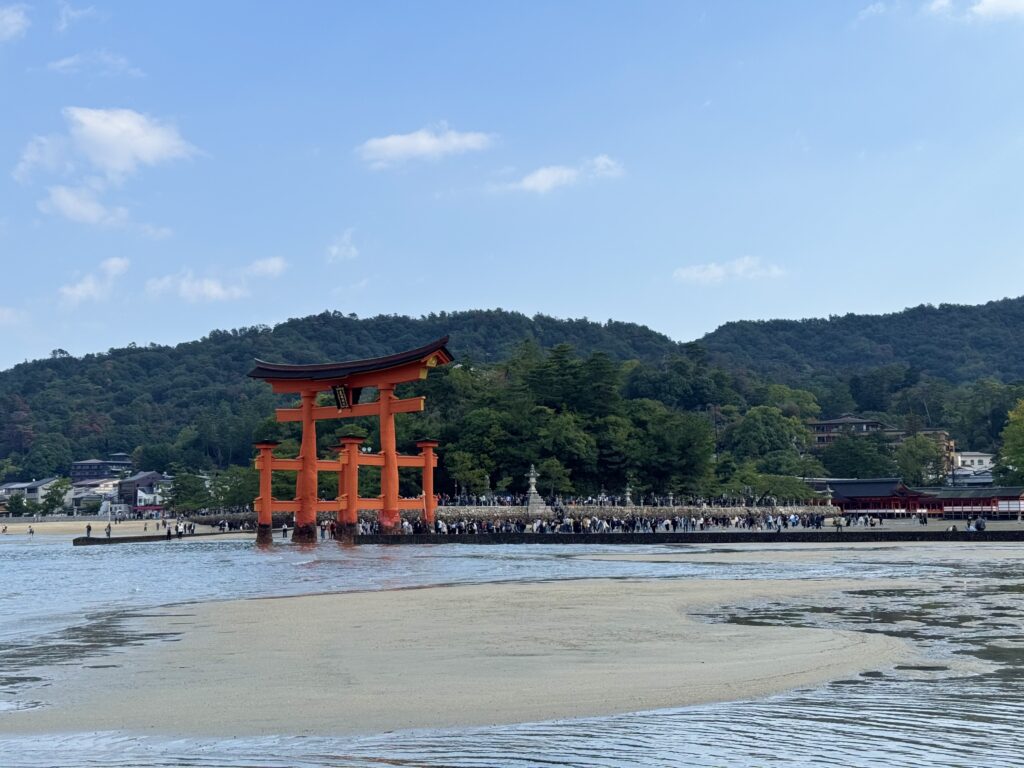
Miyajima is one of Hiroshima’s most famous sightseeing destinations, best known for Itsukushima Shrine and its iconic torii gate floating on the sea.
The fastest and most convenient way to get to Miyajima from Hiroshima Station is by using a JR train and ferry. From Hiroshima Station, take a JR train to Miyajimaguchi Station, then walk a few minutes to the ferry terminal and board the ferry to Miyajima.
The total travel time is about 45–50 minutes, and the route is simple even for first-time visitors. The combined cost is covered by the JR Pass, allowing pass holders to use both the train and ferry at no additional charge.
The ferry ride offers scenic views of the Seto Inland Sea, making the journey itself part of the sightseeing experience.
How to Get to Hiroshima Peace Memorial Park from Hiroshima Station
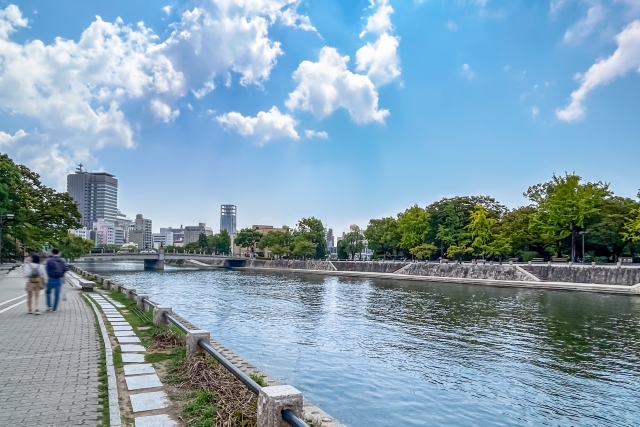
Hiroshima Peace Memorial Park is a central landmark dedicated to the memory of the atomic bombing and to the message of peace. It is one of the most visited sites in the city and easy to include in any sightseeing plan.
The most convenient way to reach the park from Hiroshima Station is by using the Hiroshima streetcar (tram). From the station, take a tram bound for Hiroden-nishi-hiroshima, Eba, or Miyajima-guchi, and get off at Genbaku-Domu Mae. The park is only a short walk from the stop.
The ride takes about 15–20 minutes, and the fare is 240 yen for adults and 120 yen for children (as of 2025).
Buses are also available, but routes can be harder to understand, and travel time may vary depending on traffic. Walking from Hiroshima Station is possible but takes around 30–40 minutes, so public transportation is generally the better choice.
How to Get to Hondori Shopping Street from Hiroshima Station
Hondori Shopping Street is Hiroshima’s main shopping and dining area and is easily accessible from Hiroshima Station by streetcar. From the station, take a Hiroshima streetcar bound for Hiroden-nishi-hiroshima Station, Eba, or Miyajima-guchi, and get off at Hatchobori Station. From there, Hondori is just a short walk away.
The streetcar ride from Hiroshima Station to Hatchobori takes about 15 minutes and costs 240 yen for adults and 120 yen for children (as of 2025).
The Hatchobori area is one of the most convenient locations in Hiroshima for both sightseeing and accommodation. Many hotels, including Hotel Small World, are located nearby, offering excellent access to streetcars, shopping streets, and major attractions. Staying in this area allows visitors to explore Hiroshima efficiently and return to their hotel without complicated transfers.
Transportation from Hiroshima Airport
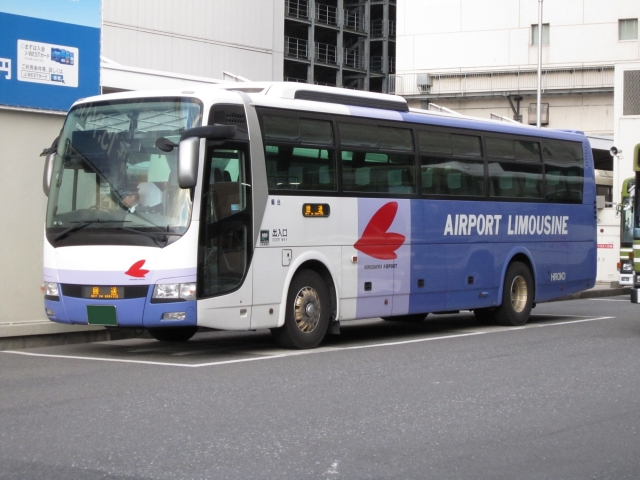
Hiroshima Airport is located outside the city center, but access to downtown Hiroshima is straightforward. The most convenient option for travelers is the airport limousine bus, which operates regular services to Hiroshima Station and central areas.
The journey usually takes between 45 and 60 minutes, depending on traffic conditions, and the fare is 1,500 yen (as of 2025). Buses are comfortable and provide space for luggage, making them suitable for international travelers arriving after long flights.
For most visitors, the airport bus offers the best balance of convenience and cost when traveling between Hiroshima Airport and the city.
Useful Transportation Passes & Cost-Saving Tips
Hiroshima offers several transportation passes that can help travelers reduce costs, especially if they plan to use streetcars frequently. One-day streetcar passes are popular among tourists who plan full days of sightseeing within the city.
For travelers visiting Miyajima, combined passes that include streetcar travel and ferry access can be a convenient option. These passes simplify payment and eliminate the need to purchase individual tickets for each segment of the journey.
Choosing the right pass depends on travel plans, but for active sightseeing days, passes can offer both savings and peace of mind.
For more details:
Economical Tickets (Hiroshima Electric Railway)
Where to Stay: Choosing Accommodation with Easy Transportation Access

Choosing accommodation with good transportation access can greatly improve the travel experience in Hiroshima. Staying near major streetcar stops or central districts helps reduce travel time and makes sightseeing more efficient.
Areas around Hatchobori and Hondori are particularly convenient, offering excellent streetcar access and easy connections to major attractions such as the Peace Memorial Park. From this area, most destinations can be reached without complicated transfers.
Hotel Small World, located in central Hiroshima near Hatchobori, is a quiet and welcoming place to stay. The hotel is built around the concept of peace, creating a calm atmosphere where guests can relax between sightseeing activities. Inside the guest rooms, visitors will find books and materials related to Hiroshima’s history, which are available to read freely during their stay. With its central location and thoughtful atmosphere, Hotel Small World offers both convenience and a meaningful stay in Hiroshima.
FAQ: Hiroshima Transportation for First-Time Visitors
Is it easy to get around Hiroshima?
Yes. Hiroshima is one of the easiest Japanese cities to navigate. Routes are straightforward, public transportation is reliable, and attractions are generally close together.
Can I use IC cards like Suica , ICOKA, SUGOCA or PASMO in Hiroshima?
Yes. Major IC cards are accepted on streetcars and buses, allowing smooth travel for visitors from other regions of Japan.
Is Hiroshima transportation foreigner-friendly?
Yes. Clear signage, simple fare systems, and tourist-focused infrastructure make Hiroshima very accessible for international travelers.
Conclusion
Hiroshima is a city where getting around is straightforward, even for first-time visitors to Japan. With streetcars covering most of the city center, JR trains connecting nearby destinations, and walkable central districts like Hatchobori, travelers can move efficiently without feeling overwhelmed.
By understanding which transportation option to use for each situation, visitors can spend less time navigating and more time experiencing Hiroshima itself. From historical landmarks to local neighborhoods and daily life, the city’s accessible transportation system allows travelers to explore at a comfortable pace and make the most of their stay.